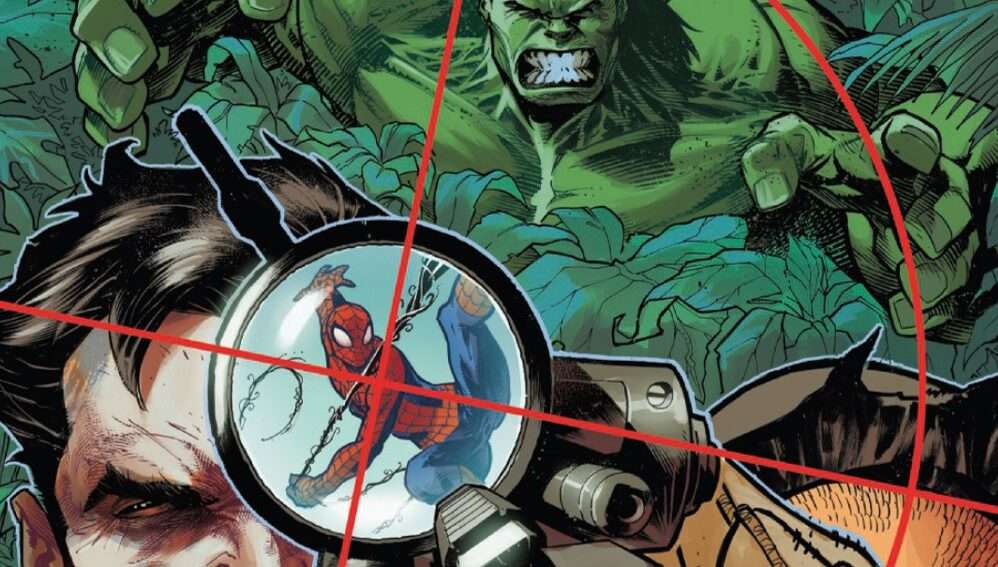
After the explosive opening chapter, Spider-Man: Long Way Home #2 slows everything down—but not in a way that drains the story of excitement. Instead, writer Jonathan Hickman and artist Adam Kubert transform the search for the Cosmic Cube into a tense international manhunt. Frank Castle is trying to carry the Cube home while the Hulk tracks him from behind, Spider-Man closes in from the other direction, and S.H.I.E.L.D. quietly operates around the inevitable disaster. It is a story about powerful men, dangerous objects, and the certainty that someone is going to make a catastrophic decision.
PROS
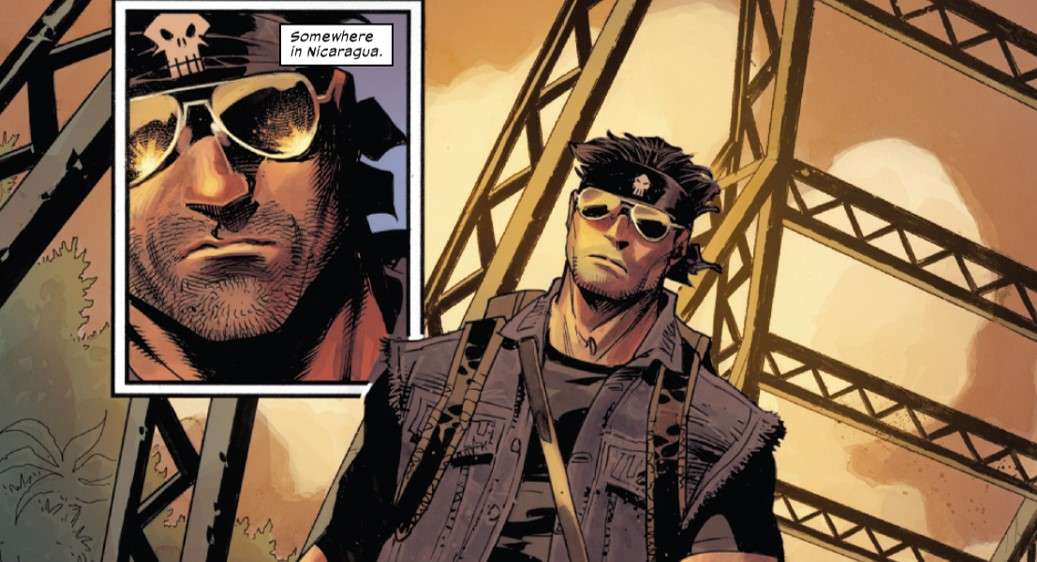
The biggest strength of this issue is its atmosphere. Hickman writes the chapter less like a traditional superhero adventure and more like a paranoid espionage thriller. Frank does not simply jump on a plane and return to the United States. He moves carefully through Nicaragua, blends into crowds, boards crowded transportation, passes through Puerto Cortés, and eventually makes his way toward Miami. Every part of the journey feels calculated because Frank knows that both governments and monsters are searching for him.
Adam Kubert’s storytelling makes this extended travel sequence work beautifully. Entire pages are built around movement, silence, body language, and small visual details. Frank barely needs to speak because the artwork communicates how naturally he disappears into dangerous environments. He observes the people around him, changes his posture when necessary, and understands when appearing threatening is useful and when becoming invisible is the safer choice.
Frank’s internal narration is especially strong during these scenes. He describes violence almost as though it were a language he learned long ago. When he needs to blend into the crowd, he does. When he needs people to stay away from him, his body does the talking. It captures the frightening competence of the Punisher without turning him into an unstoppable action figure. Frank is capable, but he is exhausted, hunted and painfully aware that the thing following him cannot be defeated with an ordinary weapon.
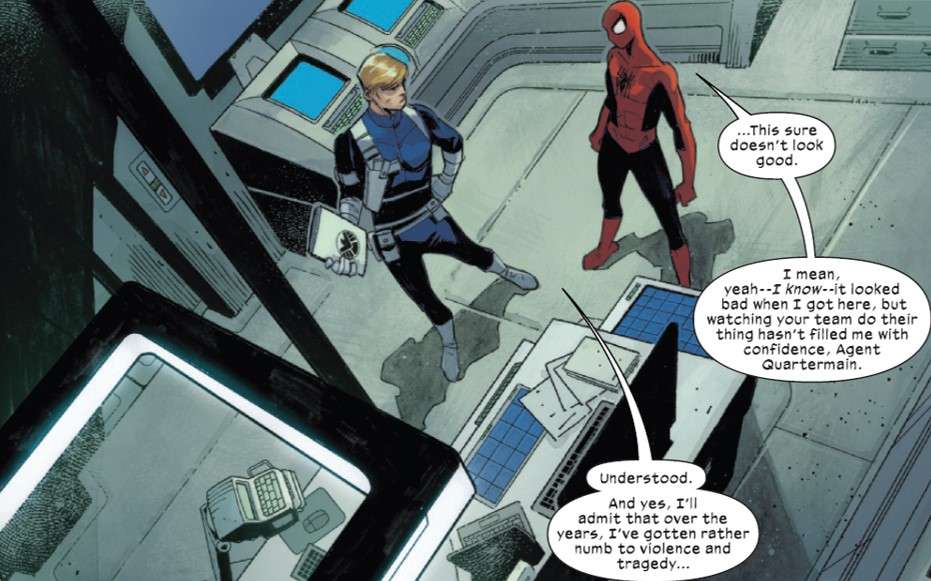
Spider-Man’s role is equally fascinating because this is not the endlessly joking, openly heroic Peter Parker many readers expect. This Peter is confident, intelligent and genuinely intimidating. When Agent Quartermain explains the situation, Peter immediately understands that Frank may not be evil, but he is carrying something too dangerous for any one man to possess. The Cosmic Cube could rewrite reality, while an unknown gamma-powered monster is already tearing through everything in its path.
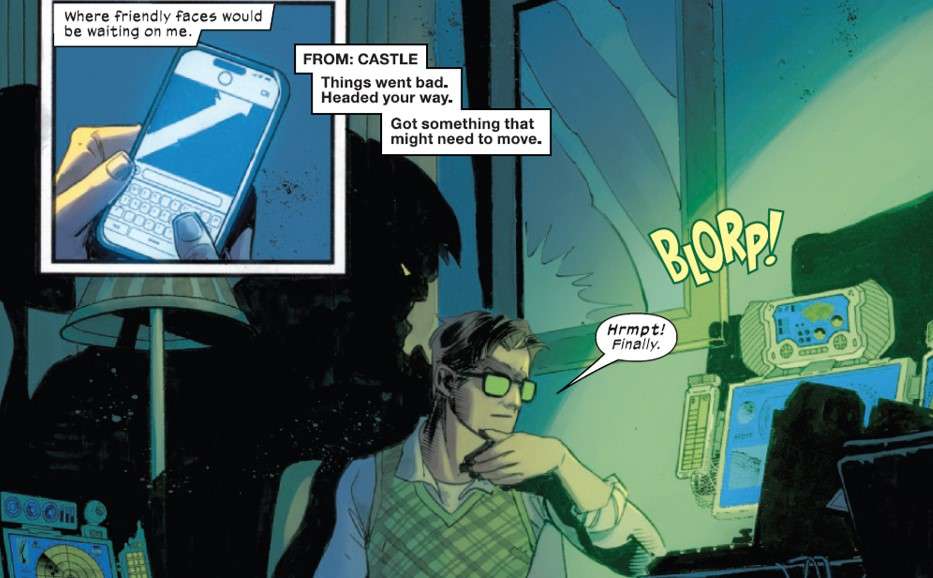
The quieter scenes involving Frank’s elderly contact and the small dog add some much-needed humanity. Frank’s message—“Things went bad. Headed your way. Got something that might need to move.”—says almost nothing directly, yet his friend understands exactly how serious the situation is. The dog’s repeated barking becomes an amusing visual element at first, but it gradually turns into a warning signal. When the stranger later arrives asking for Lieutenant Castle, the scene becomes deeply uncomfortable because we know Frank’s hiding place is no longer safe.
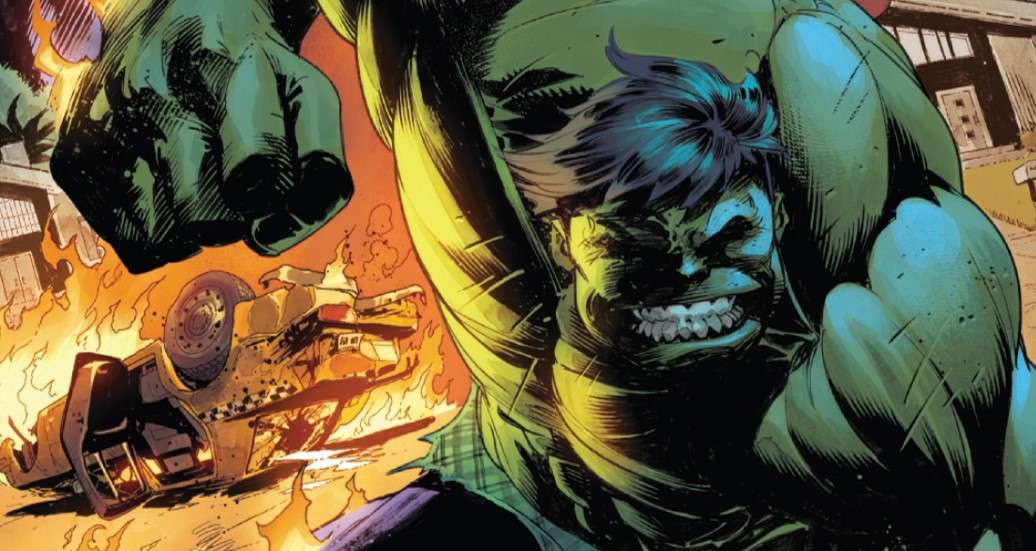
Then the Hulk arrives.
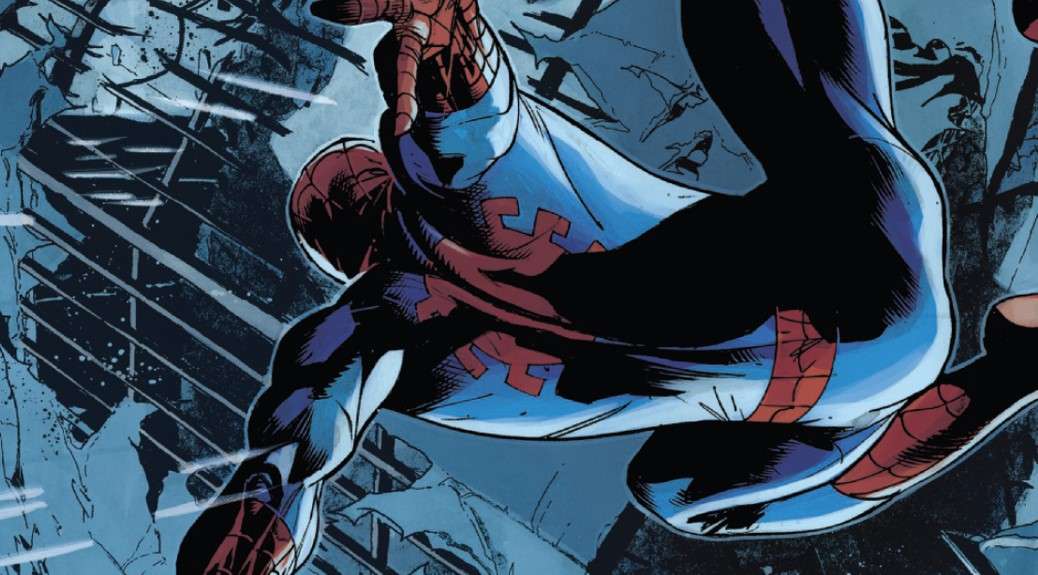
Kubert makes the Hulk feel less like another costumed character and more like a natural disaster. His appearance is sudden, violent and enormous. There is no extended speech, elaborate motivation or heroic entrance. There is simply destruction. The following pages, showing Spider-Man moving through the shattered remains of the building in the rain, are some of the most striking visuals in the issue. The tilted layouts, broken architecture and cold blue colors create a haunting sense of devastation.
The final encounter between Peter and Frank brings the entire chapter together.
Despite everything in front of him, Peter still asks for the Cosmic Cube.
Arthur Hesli’s colors deserve special recognition as well. The warm oranges and dusty browns of Frank’s journey contrast beautifully with the sterile greens of S.H.I.E.L.D.’s technology and the rain-soaked blues of the final sequence. The Cube’s glow also becomes a visual thread connecting the different locations, constantly reminding us that this small object is the reason everyone’s life is falling apart.
CONS
The only possible drawback is that this is a deliberately slow and highly decompressed chapter. Readers expecting Spider-Man, Punisher and Hulk to immediately collide in a massive fight may be surprised by how much of the issue is devoted to travel, surveillance and conversation. Very little is resolved, and several of the biggest mysteries remain unanswered. However, the tension and character work are strong enough that the slower pace feels intentional rather than empty.
OVERALL
Spider-Man: Long Way Home #2 is an excellent second chapter that proves this series is interested in more than simply placing three popular characters in the same battlefield. Jonathan Hickman turns the Cosmic Cube into the centre of a tense moral struggle, while Adam Kubert delivers some of the most cinematic and atmospheric artwork in the story so far.
Frank Castle sees the Cube as protection. S.H.I.E.L.D. sees it as a weapon. Spider-Man sees it as his responsibility. The Hulk, meanwhile, appears to see only another target to destroy.
This issue carefully moves every character closer together and ends just before the confrontation finally explodes. The long way home has already cost Frank his team, his refuge and possibly another friend—but judging by that final response to Spider-Man, he is nowhere near ready to surrender.
FINAL GRADE: A for Amazing & I for Incredible