
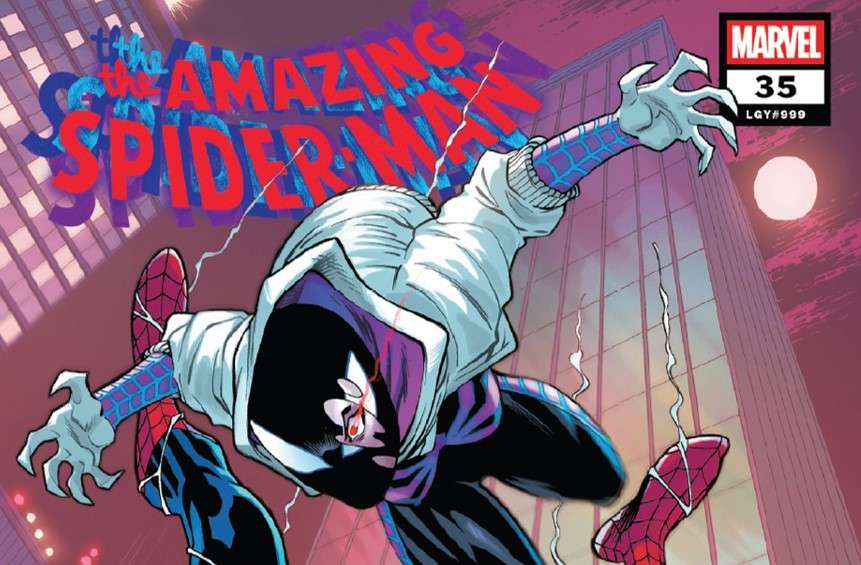
Peter Parker finally stops running… and life immediately punches back
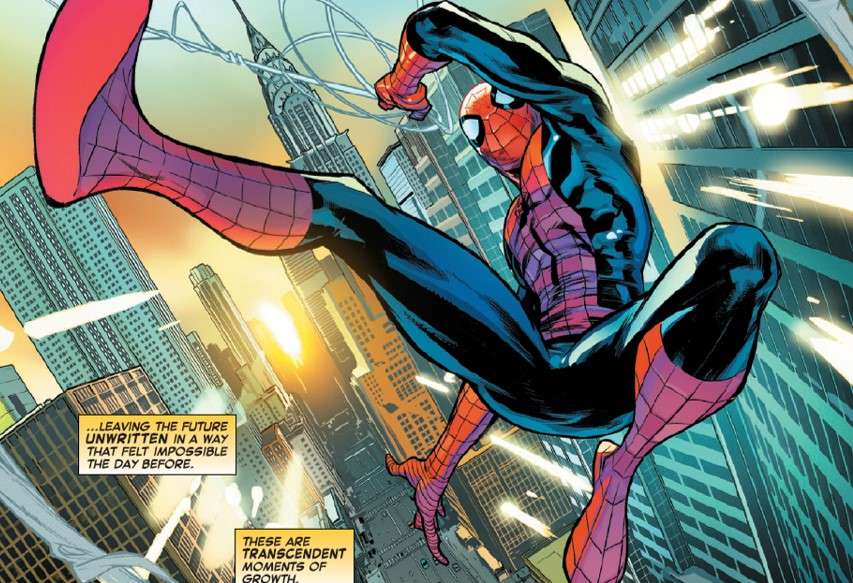
Sometimes Spider-Man stories are about saving New York from supervillains.
Sometimes they’re about stopping a collapsing building.
And sometimes they’re about realizing that avoiding dinner with your aunt because you’re emotionally overwhelmed probably isn’t a healthy long-term strategy.
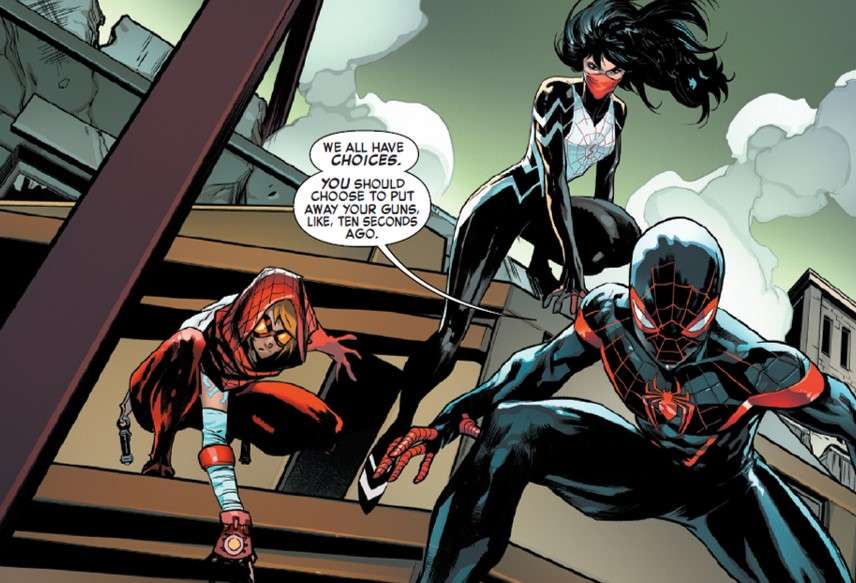
Amazing Spider-Man #35 manages to squeeze all three into one issue.
Written by Joe Kelly, with art by Francesco Manna and colors by David Curiel, this chapter continues Peter’s struggle to process the bombshell that Cormac Crane is actually May and Ben Parker’s son—meaning Aunt May has suddenly regained a child she thought she lost decades ago.
Naturally, Peter Parker responds to complicated emotions exactly as Peter Parker often does:
He stays very, very busy.
PROS
I really enjoyed how the opening turns Peter’s avoidance into a running gag without losing the emotional point underneath it.
Two weeks ago? Sorry, Aunt May, Spider-Man stuff.
One week ago? Sorry, Aunt May, more Spider-Man stuff.
Today? Hey, Damage Control, you guys need help cleaning up literally anything?
Peter is basically volunteering for superhero junk mail because confronting his feelings about Cormac sounds considerably worse.
Luke Cage notices immediately.
Their workout conversation is one of my favorite little sequences in the issue because Luke doesn’t need Peter to explain what is happening. Peter talks about how satisfying Damage Control work is because problems can simply be fixed and cleared away. Luke responds with the emotional equivalent of, “Uh-huh. And how’s that metaphor working out for you?”
Subtle, Pete.
Very subtle.
But the real heart of the issue comes when Aunt May finally shows up at Peter’s place herself.
Instead of another massive confrontation, Kelly gives us something much quieter. May admits that Peter pulling away hurts her. Peter finally tells her what he’s actually feeling: he is happy for her, but Cormac’s arrival has changed something fundamental in their relationship.
Peter has always been May’s son.
Cormac may be her biological child, but Peter is the boy she raised.
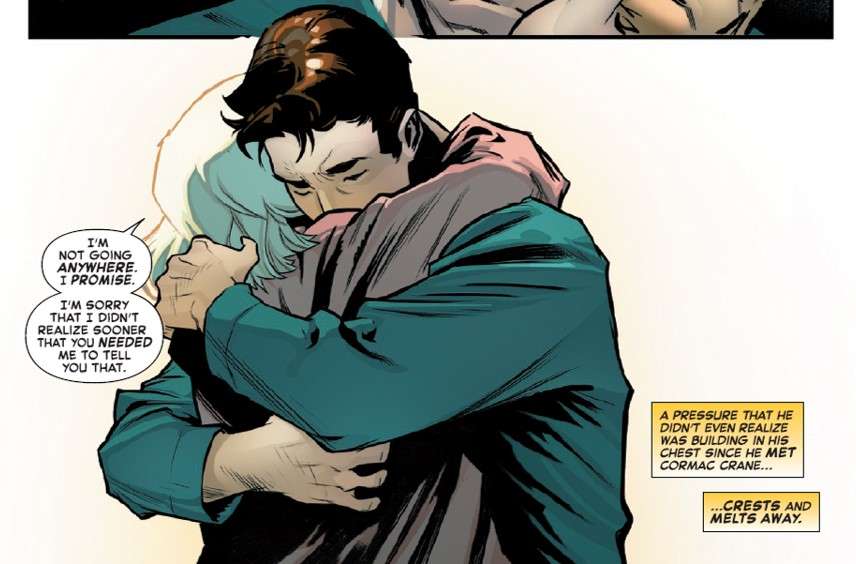
May’s answer is exactly what Peter—and frankly the reader—needs to hear. Cormac doesn’t replace him. Nothing can replace the life May, Ben and Peter shared together.
Watching Peter finally let himself collapse into Aunt May’s arms is a lovely payoff to several issues of emotional dodging.
And then the comic gives us about twelve seconds to enjoy that peace.
Because apparently Spider-Man is legally prohibited from experiencing emotional stability.
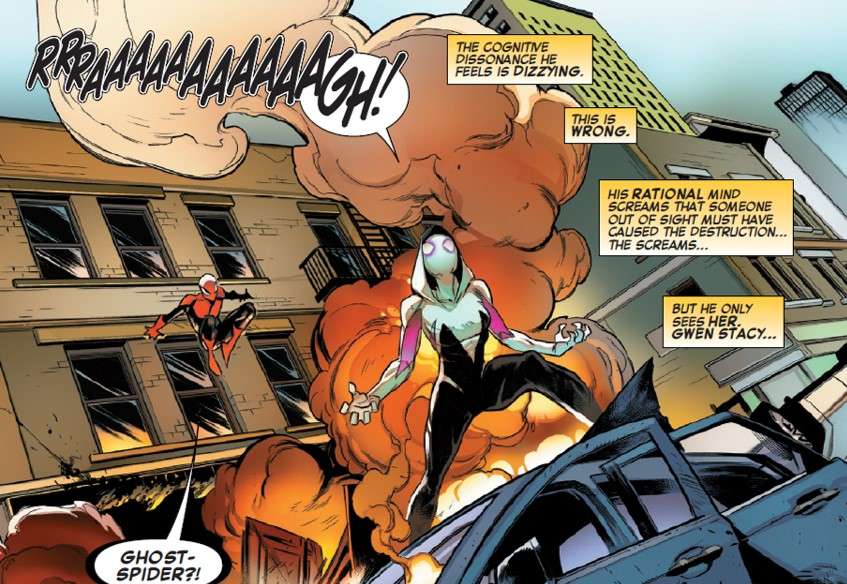
Enter Ghost-Spider.
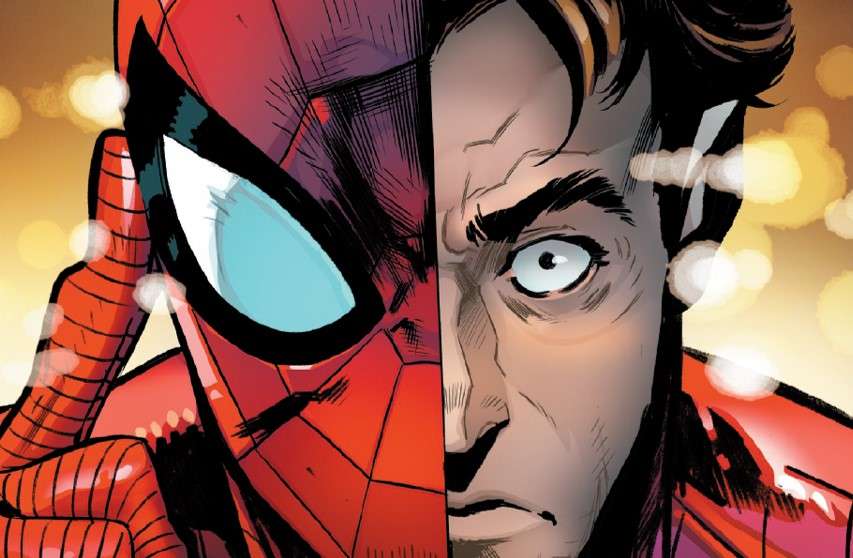
Peter encounters Gwen in the middle of absolute destruction, and his Spider-Sense immediately starts screaming. Even worse, Gwen attacks him with a level of ferocity that genuinely rattles Peter. He knows something is wrong because this simply isn’t the Gwen he knows.
What I like here is that the fight doesn’t become a prolonged “heroes misunderstand each other and punch for six pages” routine. Gwen snaps out of it quickly—and she is terrified.
She doesn’t know what happened.
She doesn’t know what she did.
And once another explosion sends everything crashing down, Peter and Gwen immediately switch into rescue mode.
That sequence is where Francesco Manna really gets to have fun. Spider-Man calculates that he isn’t strong enough to hold the collapsing structure, while Gwen stabilizes the building and Damage Control deploys a shoulder-carried auto-bridge in a way Nick Fury apparently never intended.
Superhero engineering!
I love it.
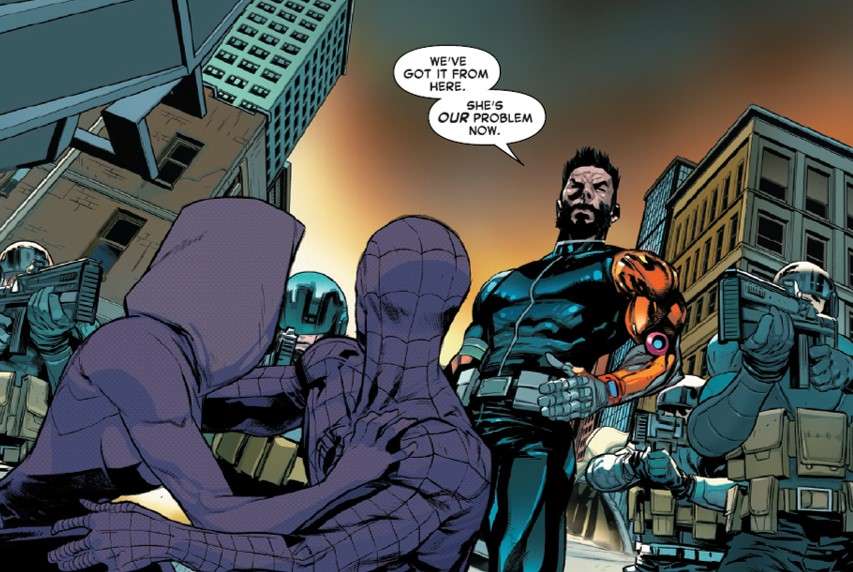
Then Agent Griffyn arrives and sees Gwen as a threat that needs to be contained, while Peter immediately plants himself between her and Damage Control. It’s a smart payoff to Peter enjoying the organization’s clean, orderly approach earlier. Suddenly “control” looks very different when the person being controlled is his friend.
Peter ultimately sends Gwen for help—and interestingly, she asks to see Norman Osborn.
Nothing ominous about that sentence whatsoever.
CONS
My biggest complaint is that Gwen’s mystery is almost too mysterious.
Something clearly happened to her, her powers or her state of mind, but the issue gives us very little beyond “Whoa, Gwen suddenly scary.”
It works as a hook, but I wanted one more breadcrumb.
Also, Agent Griffyn shifts from Peter’s dependable new ally into Stern Government Guy™ rather quickly. His reasoning makes sense, but the transition feels slightly engineered to create friction between Peter and Damage Control.
FINAL GRADE: A+
For most of its runtime, Amazing Spider-Man #35 is a surprisingly warm issue about Peter finally admitting that he can’t web-swing away from uncomfortable emotions forever.
Then the final page arrives.
Peter gets a call.
Aunt May has suffered a stroke.
And suddenly everything he just learned about making time for the people he loves becomes painfully immediate.
That cliffhanger lands because the issue spent so much time rebuilding the emotional connection between Peter and May first. It’s not just shock for shock’s sake—the groundwork is there.
With Amazing Spider-Man #1000 coming next, Peter Parker is heading into a milestone issue with Gwen’s terrifying mystery unresolved, his relationship with Damage Control strained, Cormac still reshaping the Parker family…
…and Aunt May fighting for her life.
So much for having things under control. 🕷️



Recent Comments