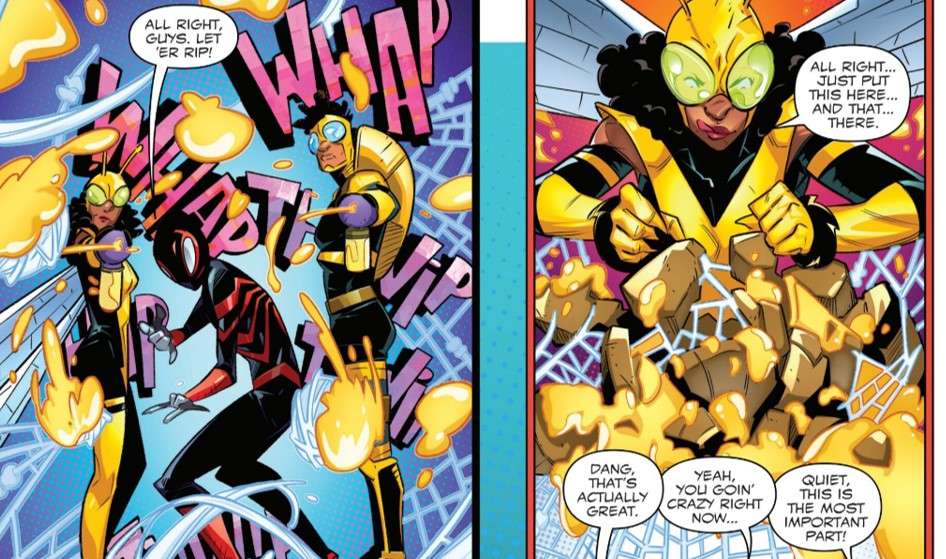
Astonishing Miles Morales Spider-Man – The Art of Thwip #1 is a fun, energetic, and surprisingly heartfelt story that understands one of the best things about Miles Morales: his world feels lived-in. The issue starts small, with Bumbler, Vespa, Miles and Ganke dealing with everyday worries like money, family, and school, before spiraling into a chaotic art heist involving the good guys, the two bee-themed villains, a stolen sculpture, and a very confused museum staff. What makes the issue work is how naturally it balances superhero action with Miles’ personal life. Even when the plot becomes silly and fast-paced, the story keeps grounding itself in Miles’ relationships, especially with Ganke, his dad, and the wider web of young heroes around him.
PROS:
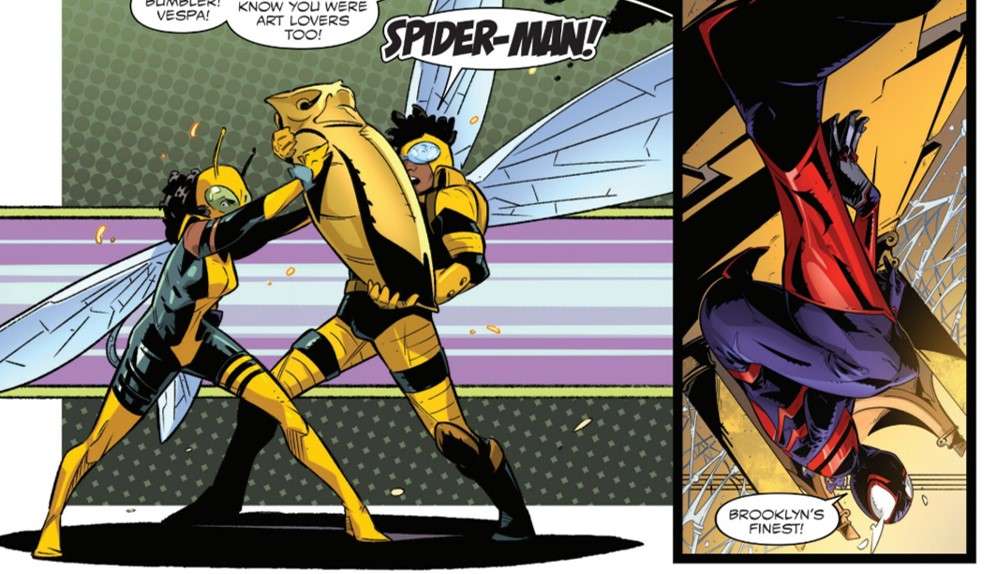
One of the strongest parts of the issue is its sense of humor. Bumbler and Vespa are intentionally ridiculous villains, but they are used well. Their banter, their overconfidence, and their very specific bee-themed gimmick give the issue a playful Saturday-morning-cartoon energy without making the stakes feel completely empty. Miles being thrown into this absurd situation while still trying to stay responsible makes the comedy land even better. The art museum setting also gives the issue a distinct flavor, allowing the story to play around with visual gags, background details, and the idea of art as something that means different things to different people.
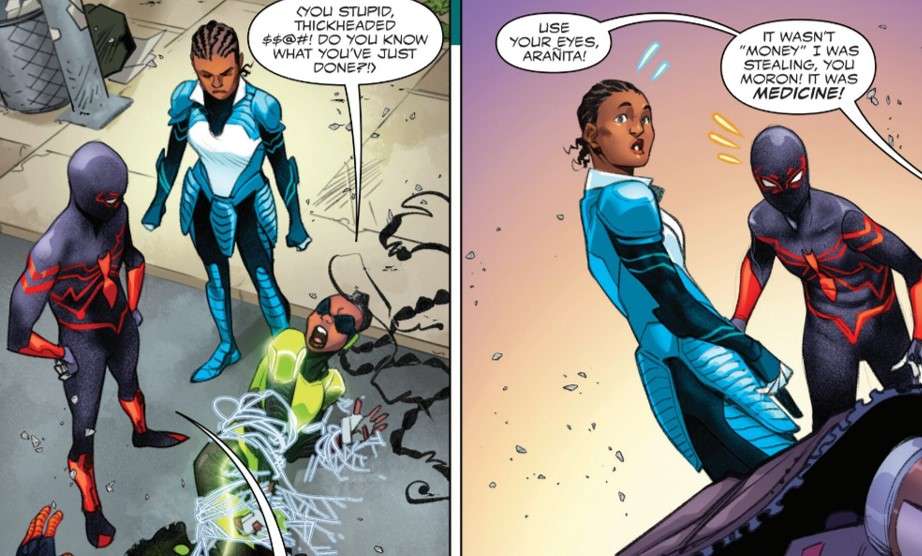
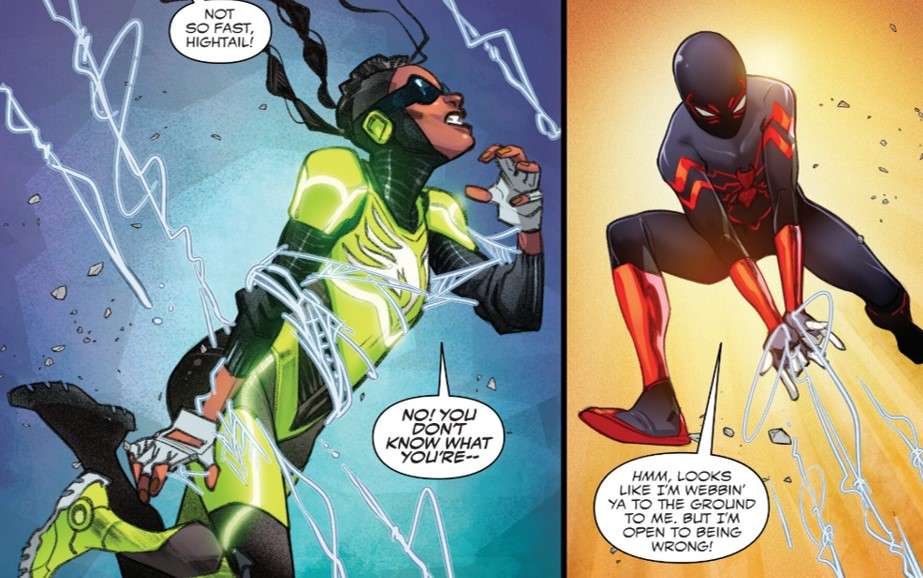
The issue also does a good job showing Miles as both experienced and still young. He is clearly capable, quick-thinking, and heroic, but he is also distracted, pressured, and still figuring things out. The same goes for the villains of the comic book. Their concern about money, their hesitation to ask the mom for help, and their frustration when things go wrong make them all feel relatable. Even for Hightail, at the closing pages, we see a deeper mission surface, something more than just petty crime involving money. The ending, where everybody realizes that the “money” was actually medicine, adds a stronger emotional beat to what initially seemed like a light and comedic adventure. It gives the story a meaningful turn without suddenly becoming too heavy.
Another highlight is the supporting cast. Ganke’s presence brings a lot of warmth and humor, and the short appearance of Gust and Shift connects the issue to Miles’ larger circle without making the story feel overstuffed. Their conversation about family after the events of God War is a nice moment, especially because it shows that Miles’ world is not just about fighting villains. It is also about people trying to find where they belong, who they can trust, and what kind of hero they want to become. That theme fits Miles really well.
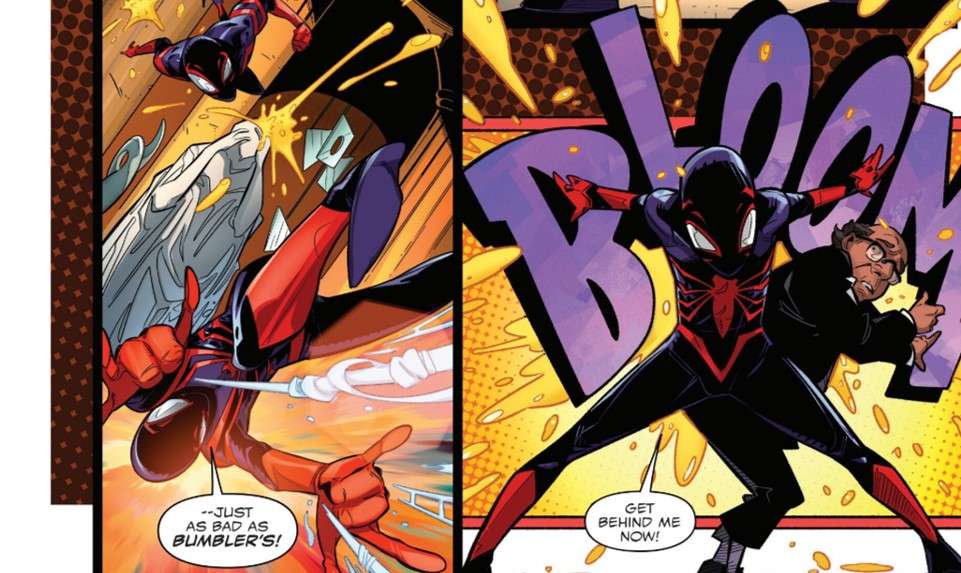
The artwork is bright, expressive, and full of movement. The action scenes have a strong sense of motion, especially when Miles is swinging through the museum, dodging honey blasts, and trying to save people from falling debris. The colors help the issue pop, with the yellow-and-black bee visuals standing out against Miles’ red-and-black suit. The comic also makes good use of panel layouts, with the action often feeling playful and kinetic rather than stiff.
CONS:
That said, the issue is not without a few weaknesses. The bee villains are fun, but they are not especially deep, and some readers may find them more goofy than memorable. The story also moves very quickly, so a few emotional beats, especially the final reveal about the medicine, could have used a little more breathing room. The issue clearly wants to be light and fast, which works for the most part, but it also means some of its stronger ideas do not get explored as much as they could have been.
FINAL GRADE: B for Bumbler
Overall, The Art of Thwip #1 is a charming and entertaining Miles Morales story that delivers humor, action, and heart in a compact package. It may not be a major, game-changing chapter for Miles, but it succeeds as a fun character-focused issue that reminds readers why his corner of the Spider-Verse remains so enjoyable. It is colorful, funny, and grounded by a sincere emotional core — exactly the kind of filler story that makes Miles feel like a hero worth following beyond the big events.