There are issues of Amazing Spider-Man built around spectacle, villains, and the kind of action that looks great splashed across a double-page spread. Then there are issues like this one—stories where the punches matter, but only because of the emotional weight behind them.
Amazing Spider-Man #32 is very much the latter.
Joe Kelly and Patrick Gleason deliver an issue about pain, family, guilt, and the uncomfortable truth that some wounds cannot simply be beaten into submission. Peter spends much of the story trying to protect the people around him by carrying everything alone, only to be reminded—again and again—that pain does not disappear just because he refuses to speak about it.
The issue opens with Peter chatting with Cormac Crane, the mysterious man whose genetic connection to the Parker family was revealed in the previous chapter. Cormac is not an established villain or a familiar face hiding behind a new identity. He is something potentially far more disruptive: Aunt May and Ben Parker’s son, taken from them before Peter ever knew he existed.
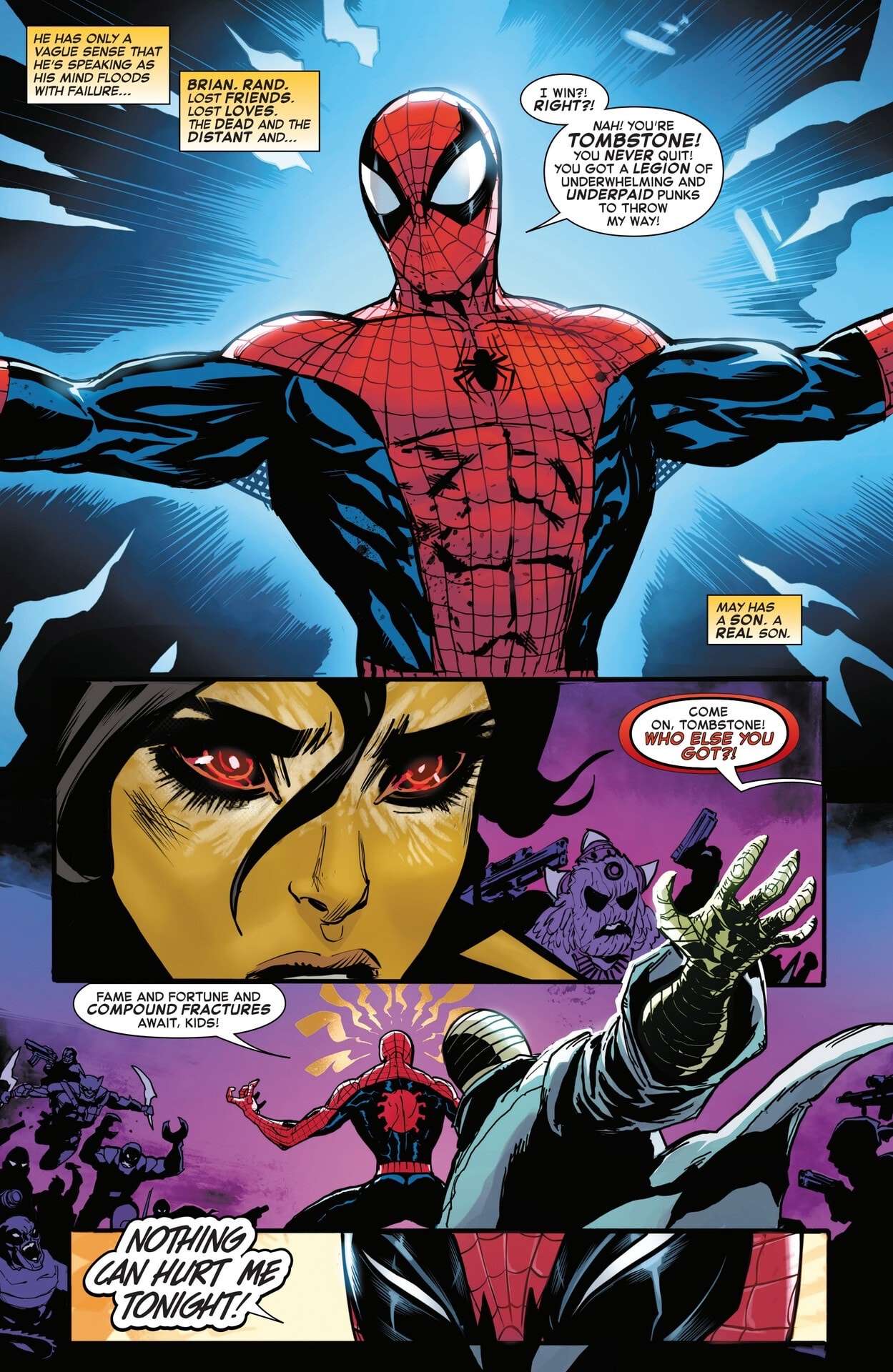
That emotional uncertainty follows Peter Parker into the issue’s main action sequence: the Blood Auction.
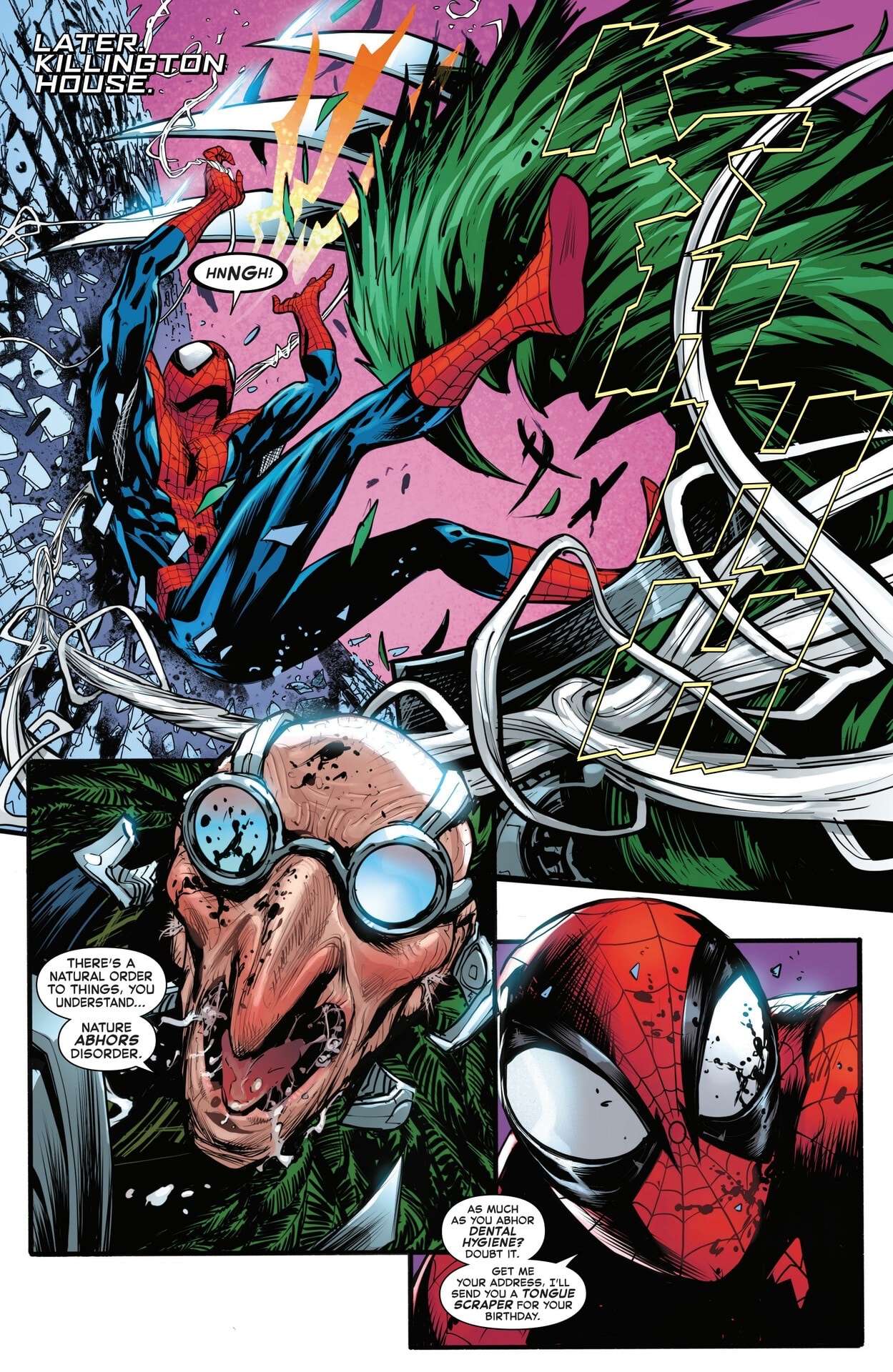
Peter is not there to stop a random supervillain gathering or recover another dangerous weapon for the sake of the plot. He enters the auction specifically to secure Herman’s Shocker gauntlets, ensuring that no one else can use them after Herman’s death.
That motivation gives the sequence far more meaning than a conventional villain brawl. Herman may have spent much of his career as a criminal, but Peter still sees the person beneath the costume. The gauntlets are not merely equipment. To Peter, they have become a symbol of someone he failed to save and a painful reminder that every mask belongs to a human being.
The developing relationship between Peter and Raelith remains one of the more interesting elements of this run.
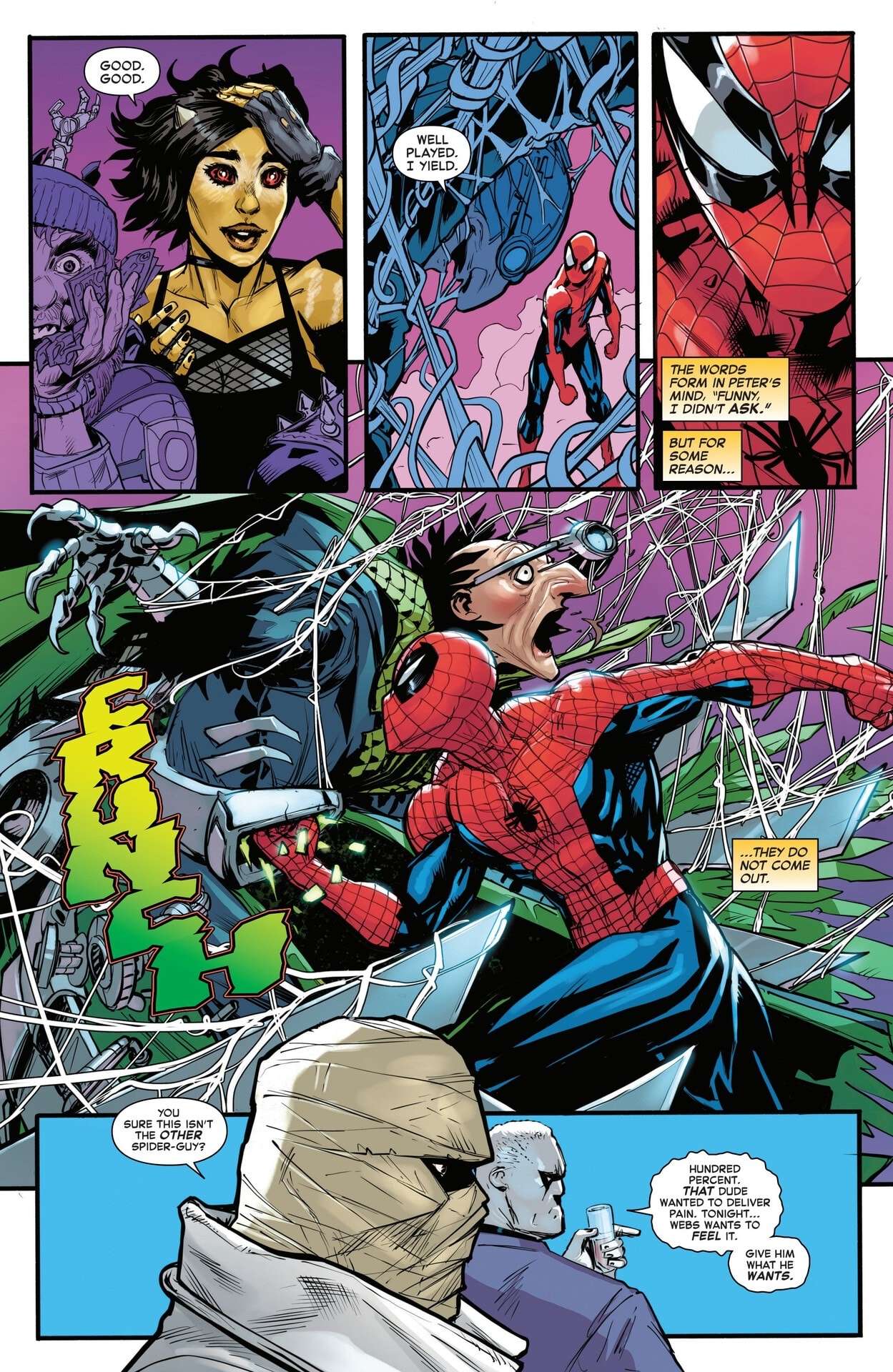
Raelith’s confrontation with RX becomes the clearest expression of the issue’s central theme. Rather than simply overpowering RX, Raelith takes on the pain.
It is a striking concept because it mirrors what Peter tries to do throughout the entire issue.
Peter wants to carry May’s pain. He wants to carry the guilt surrounding Herman’s death by securing the gauntlets. He wants to protect Raelith by placing himself between her and danger. Peter does not always understand that taking someone’s pain cannot be permanent. Eventually, people must choose what they are ready to face, and Peter cannot make that choice for them.
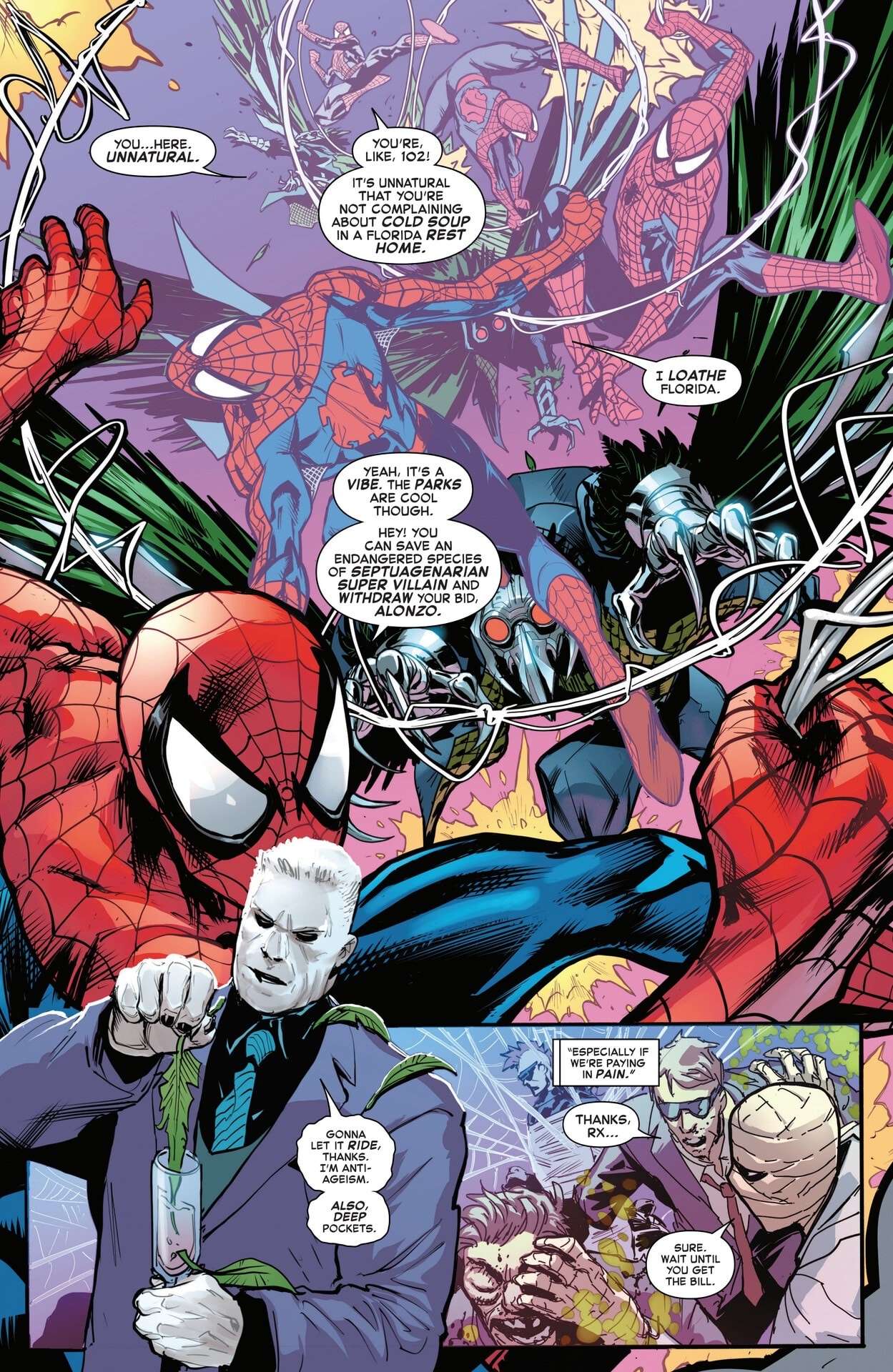
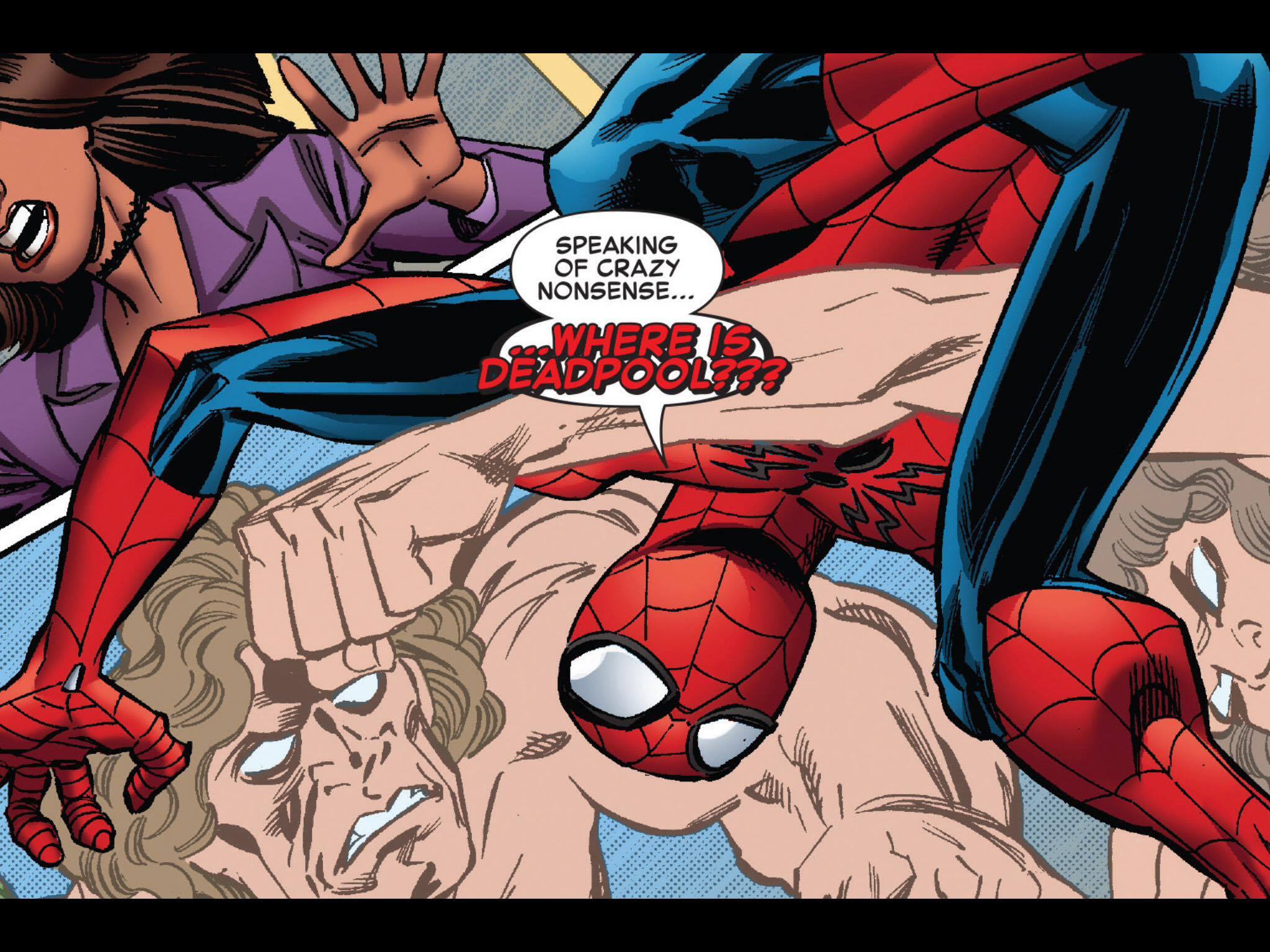
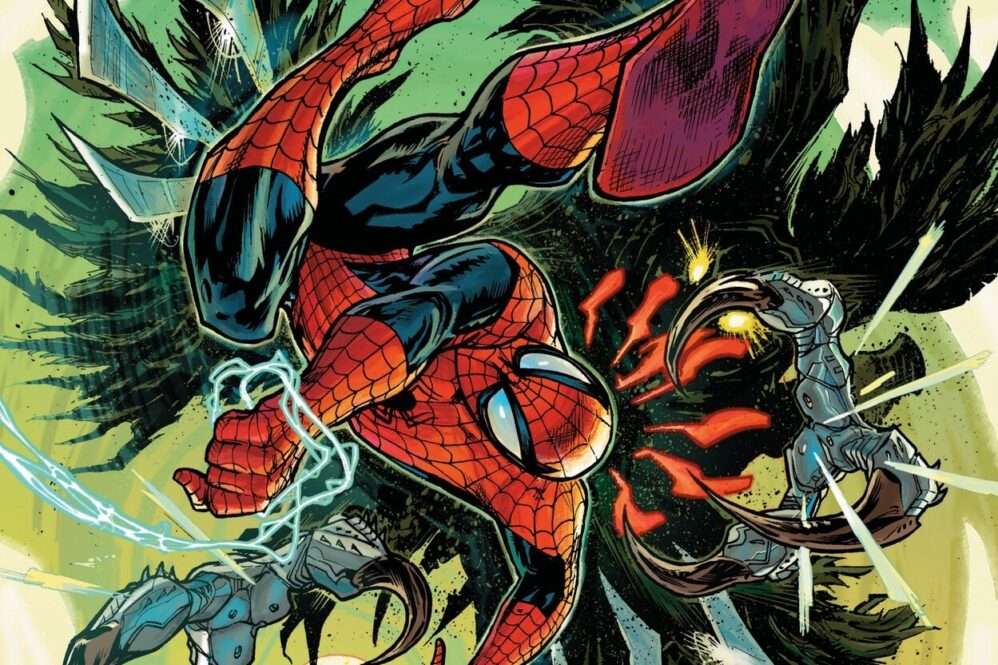
The Blood Auction itself is energetic and visually chaotic, giving Gleason plenty of room to fill the pages with strange villains, tangled webs, mechanical weapons, and frantic movement. Peter fights through the gathering alongside Raelith, while Tombstone looms over the proceedings as both threat and reluctant authority.
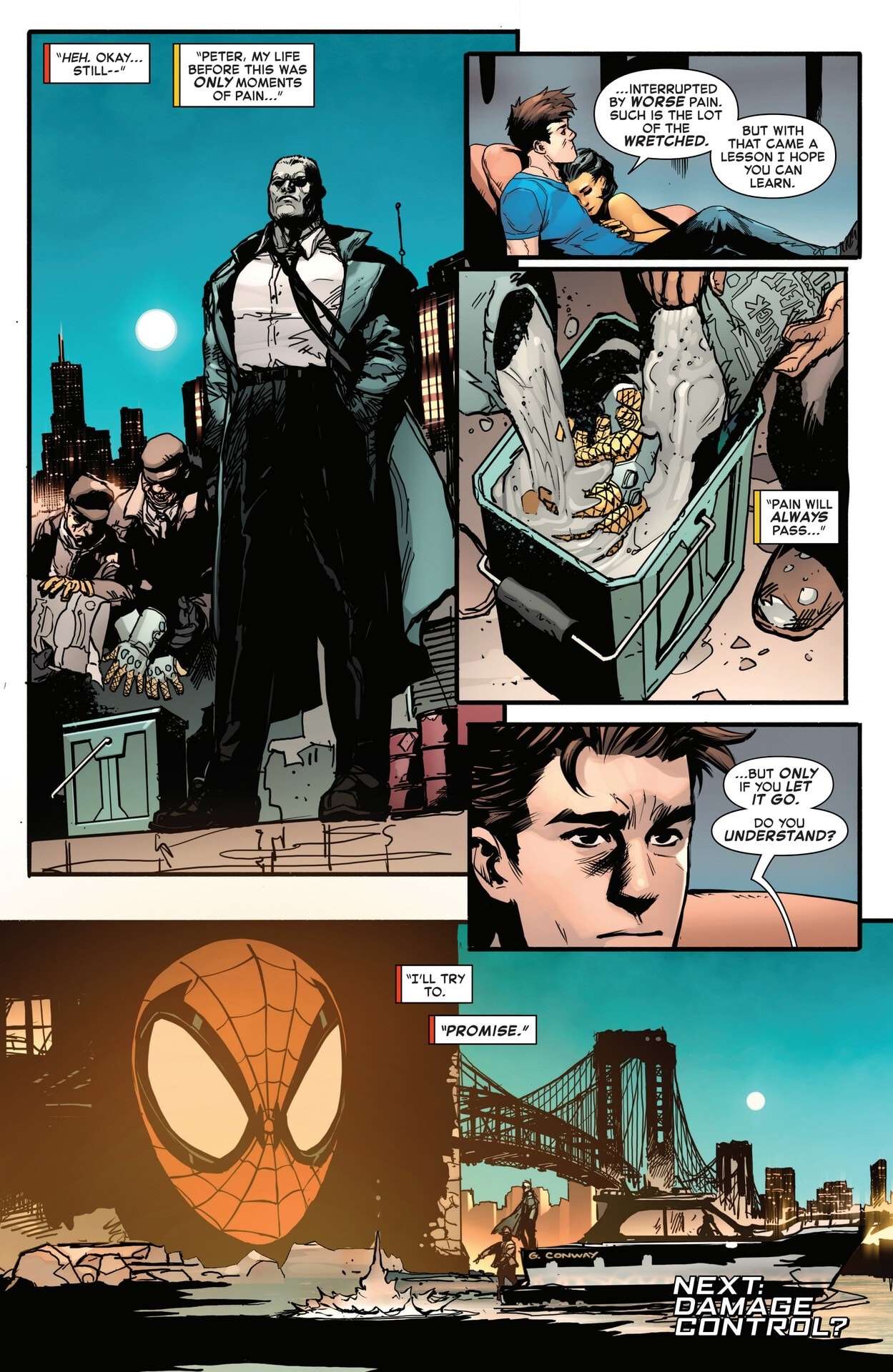
The resolution with Tombstone is particularly effective because it avoids the obvious outcome. Peter does not defeat him in a giant final battle. Instead, he explains why the gauntlets matter.
It is a surprisingly human moment between two men who have caused each other tremendous pain. Tombstone does not become Peter’s friend, nor does the scene excuse anything he has done. But he acknowledges Peter’s grief and gives him the space to deal with Herman’s legacy in his own way.
That sequence ties beautifully into the issue’s final message: pain will always pass, but only if you allow yourself to let it go.
The closing moments with Peter and Raelith are quieter but equally important. After the violence and emotional turmoil, they sit together and talk. Raelith tells Peter that her life before him contained moments of pain interrupted by even worse suffering, but being with him has taught her something different.
There is hope here, but it is fragile.
Peter has spent much of his life believing that responsibility means carrying every burden alone. Raelith challenges that belief simply by allowing him to be vulnerable. Their romantic connection does not feel like a simple superhero pairing. It is two wounded people trying to understand whether they can create something gentler together.
The final image of Peter promising to try is understated, but it lands.
PROS
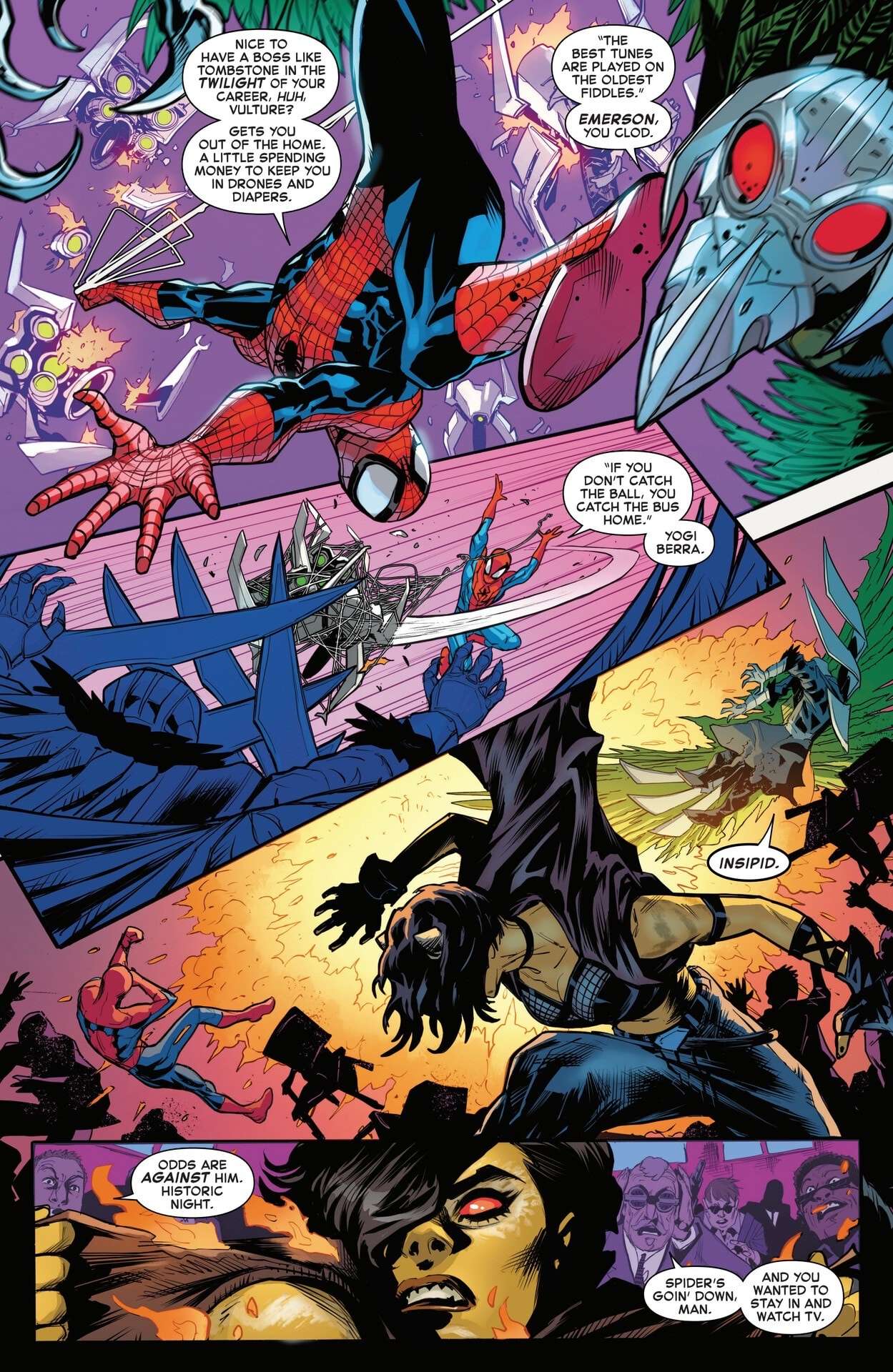
Patrick Gleason’s artwork gives the issue both energy and emotional clarity. The Blood Auction pages are loud, colorful, and crowded without becoming impossible to follow, while the quieter scenes allow faces and body language to carry the story.
Peter’s reason for entering the auction is also strong. Connecting the Shocker gauntlets to Herman’s death gives the action emotional purpose and reinforces Peter’s compassion for people others would dismiss as criminals.
Raelith’s battle with RX is another highlight. Her ability to carry someone else’s pain becomes the thematic backbone of the issue.
The Peter and Raelith relationship continues to feel layered and sincere. Their connection is romantic, but it is also built on shared trauma, emotional honesty, and the possibility that neither of them has to suffer alone.
CONS
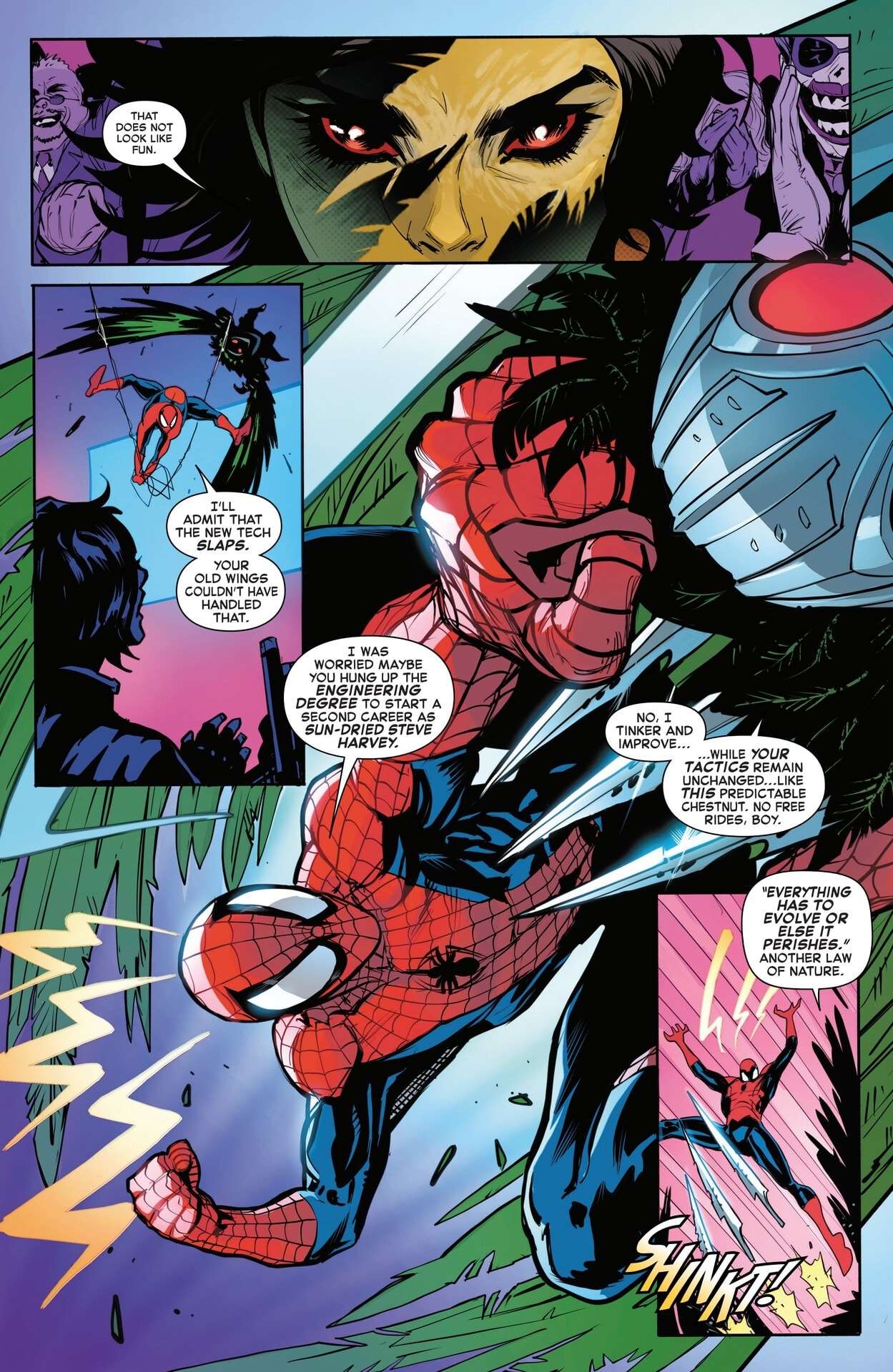
The Blood Auction is visually exciting, but several of the villains and moving parts receive so little context that the sequence can occasionally feel like a collection of striking images rather than one fully cohesive event.
Cormac’s storyline is emotionally important, but it remains mostly separated from the central auction plot. The thematic connection is clear, yet the issue sometimes feels like two strong stories placed beside each other rather than completely woven together.
VERDICT
Amazing Spider-Man #32 is a thoughtful and emotionally resonant issue disguised as a chaotic supervillain auction.
Its best moments are not the punches, the webs, or the strange weapons being sold. They are the moments when Peter admits what he is really feeling: fear for Aunt May, grief over Herman, concern for Raelith, and exhaustion from carrying too many secrets.
This issue understands that Peter Parker’s greatest strength has never simply been his ability to endure pain.
It is his willingness to keep caring despite it.
And perhaps the next step in his growth is realizing that responsibility does not always mean carrying everything alone.