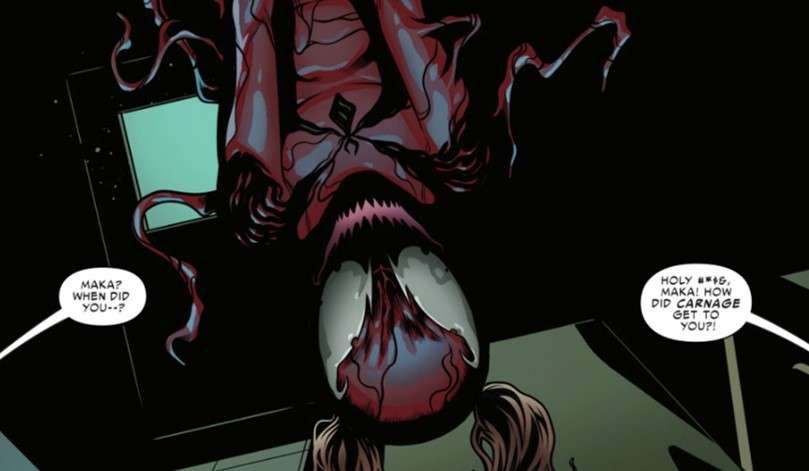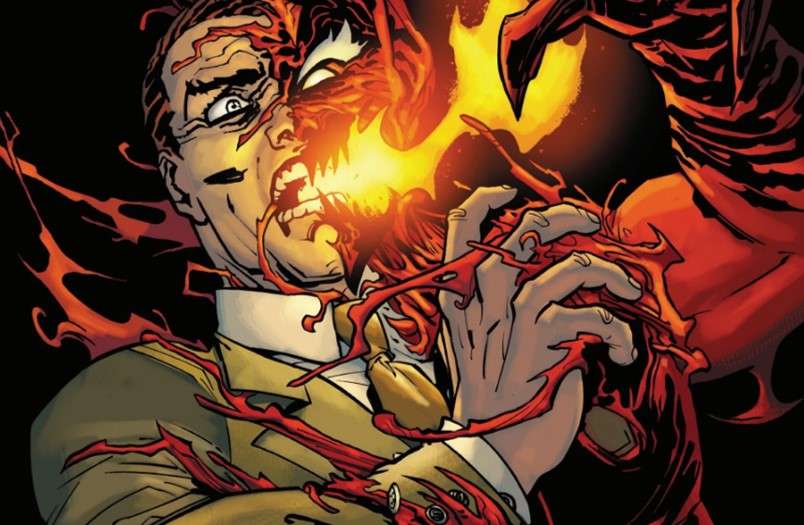
Amazing Spider-Man: Spider-Versity #4 turns the series’ superhero school premise into something far more dangerous, as Norman Osborn’s attempt to rehabilitate villains begins collapsing under the weight of his secrecy, arrogance, and old habits.

PROS:
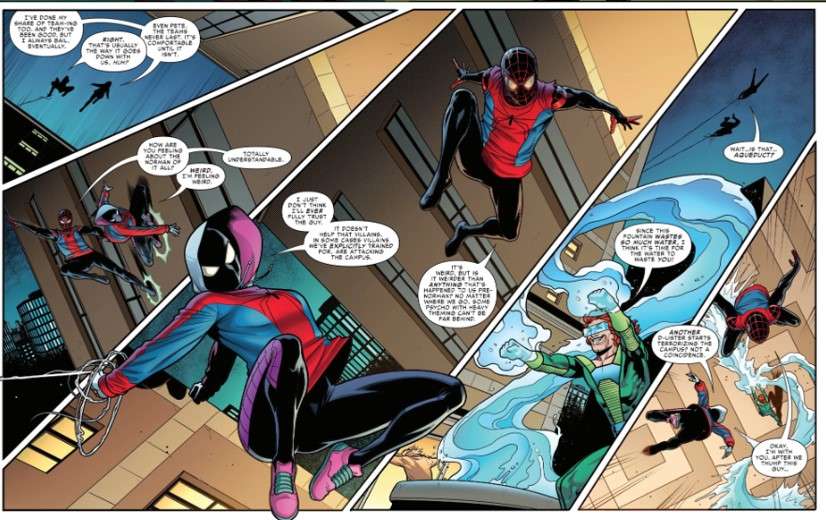
Writers Jordan Morris and Joe Kelly open with an effective contrast between ordinary campus life and the threat quietly growing beneath it. Miles Morales and Gwen Stacy are beginning to settle into Spider-Versity, while the other students train, socialize, and cautiously form friendships. Their playful rooftop race gives the issue some welcome warmth, and Miles’ comments about finally feeling comfortable with a team make what follows feel more personal. This is not merely another collection of Spider-characters waiting for a crossover fight; it is starting to resemble a community.
That sense of safety, however, is largely artificial.
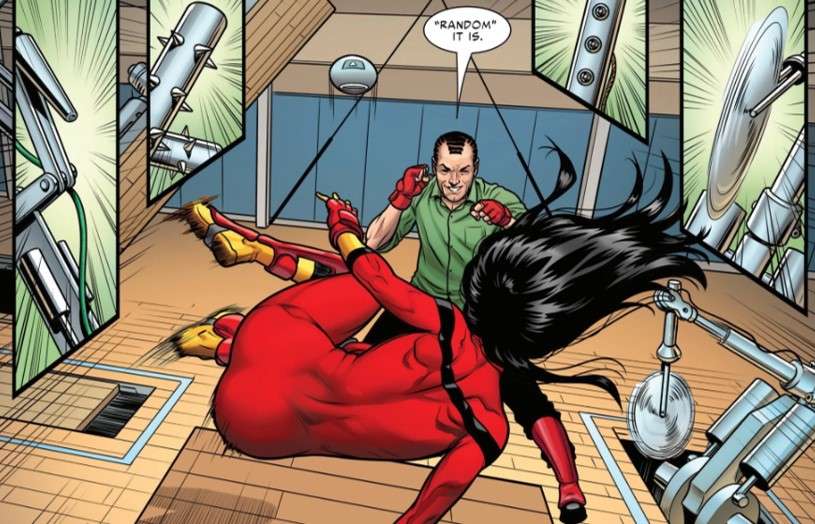
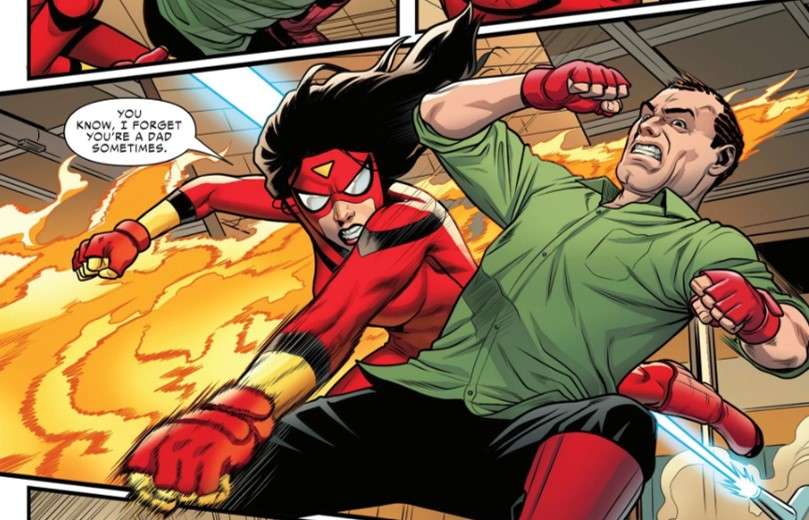
Jessica Drew discovers that Norman has been secretly manipulating the program. Rather than simply preparing the students for possible threats, he has been arranging attacks by carefully selected villains, treating real people and real danger as components in an “effective syllabus.” Norman argues that he is giving former villains the same chance at redemption Peter Parker once gave him, but Jessica correctly points out the enormous difference between offering someone a second chance and placing inexperienced students in manufactured life-or-death situations without their consent.
The confrontation works because Norman’s reasoning is not entirely empty. His belief that people can change comes from personal experience, and his desire to repay Peter’s faith in him feels sincere. Yet sincerity does not make his actions responsible. Norman still assumes that he alone knows what everyone needs, and that he has the right to control the circumstances around them. Even while trying to become a better man, he continues to behave like Norman Osborn.
That contradiction gives the issue its strongest thematic material. Spider-Versity is supposedly about teaching young heroes how to make good decisions, yet its founder is concealing information, manipulating outcomes and exposing others to risks they never agreed to take. Norman may no longer be the Green Goblin, but his instinct to turn people into pieces on a board remains alarmingly intact.
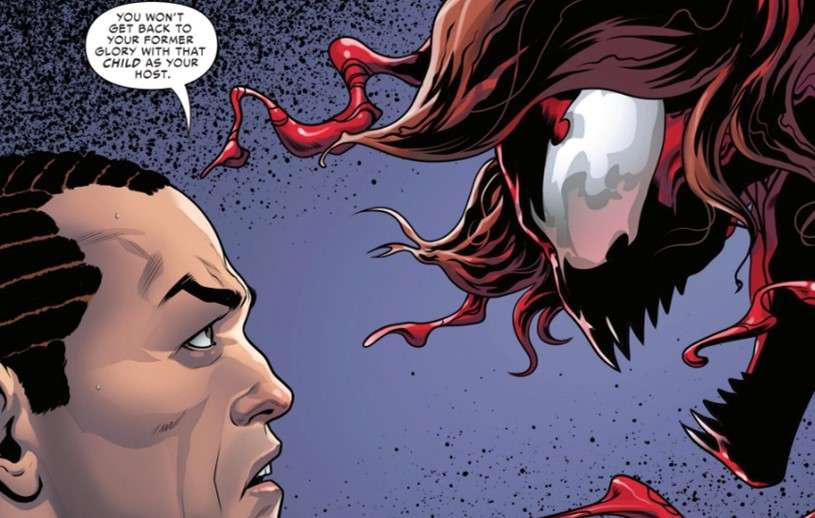
Meanwhile, Maka’s bond with Carnage brings that moral conflict into the open. The symbiote initially treats her like a friend, twisting her loneliness and desire for connection into something playful and seductive. The younger Spider-heroes hesitate because Maka is still inside, but Carnage has no interest in preserving that bond once Norman becomes available. Its real objective is not Maka—it is Norman.
The final sequence lands especially well because Carnage understands exactly where Norman remains vulnerable. It does not simply attack him physically; it appeals to the part of him that remembers the power, violence and freedom of his former life. Norman insists that Carnage needs him, but the closing transformation suggests the temptation runs both ways. The emergence of the Red Goblin is therefore more than a dramatic cliffhanger. It is the nightmare version of the issue’s central question: can Norman truly change, or has he merely been waiting for the right excuse to become a monster again?
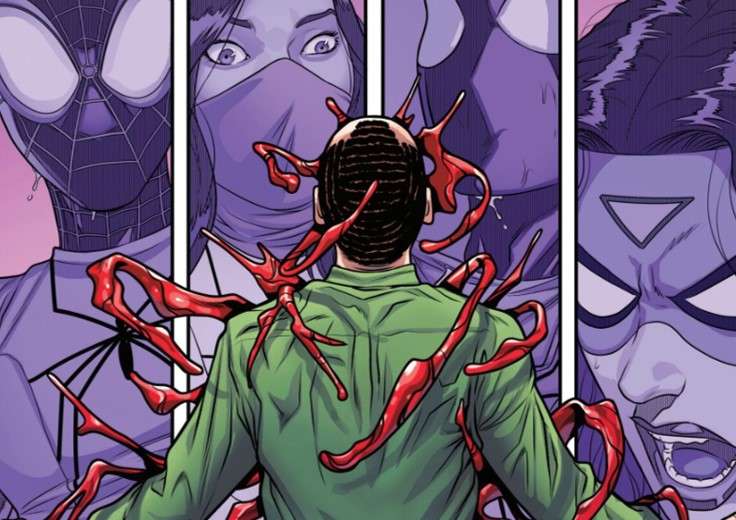
Pere Pérez’s artwork keeps the large cast readable and gives the action a lively, kinetic energy. The quieter character exchanges are expressive, while Carnage’s pages become progressively darker and more claustrophobic. The final transformation is appropriately grotesque, combining Norman’s Goblin imagery with the symbiote’s fluid brutality to create a genuinely threatening final image.
CONS:
The issue occasionally feels crowded, particularly when moving between the students’ personal lives, Norman and Jessica’s argument, and Maka’s possession. Some members of the ensemble remain little more than recognizable faces and costumes, while Maka’s emotional connection to Carnage could have benefited from additional development before the confrontation. Still, the story’s major character beats are clear, and the cliffhanger successfully brings its separate threads together.
FINAL GRADE: PASSED WITH FLYING COLORS!!! GRADUATED WITH HONORS!!!!
Amazing Spider-Man: Spider-Versity #4 is the miniseries’ most consequential chapter so far. Beneath its youthful team dynamics and colorful campus setting is a sharp story about redemption without accountability—and the danger of believing that good intentions excuse manipulation. Norman built Spider-Versity to prove that people can change. By the end of this issue, he may become the greatest argument against his own lesson.