Peter Parker has officially reached the stage of his superhero origin where “I got bitten by a spider” is somehow the least disturbing part.
Midnight Spider-Man #2, “The Eight-Handed Man,” takes the body-horror promise of the debut and pushes it somewhere much nastier. Phillip Kennedy Johnson spends much of the issue keeping Peter himself just out of reach, letting Felicia Hardy, Curt Connors and the people behind Oscorp slowly reconstruct what happened after that bite. The result is less a traditional superhero origin than a corporate incident report written by David Cronenberg.
PROS
The smartest choice Johnson makes is turning the spider bite into a mystery instead of treating it as familiar mythology. Felicia starts the issue looking for Peter after he misses his appointment and stops answering messages. That concern eventually leads her back to Oscorp, where Doctor Octavius walks her through security footage showing exactly where the spider came from.
Peter, it turns out, really won the radioactive lottery.
The spider was exposed to the same hormones, radiation and pharmaceuticals as one of Oscorp’s horrifying test subjects before hitching a ride into Peter’s orbit. Suddenly, one of the most famous accidents in comics feels less accidental and much more like contamination. It also makes Oscorp’s interest in Peter immediately sinister. They do not see a teenager in danger. They see escaped property.
Felicia continues to be one of the book’s strongest characters. She is slick and confident when dealing with Connors, but that confidence evaporates once Octavius makes it clear that her own position is conditional. Find Peter. Secure the bag. Get the contract signed. Otherwise, she can “cease to exist.” Corporate onboarding has rarely sounded this fatal.
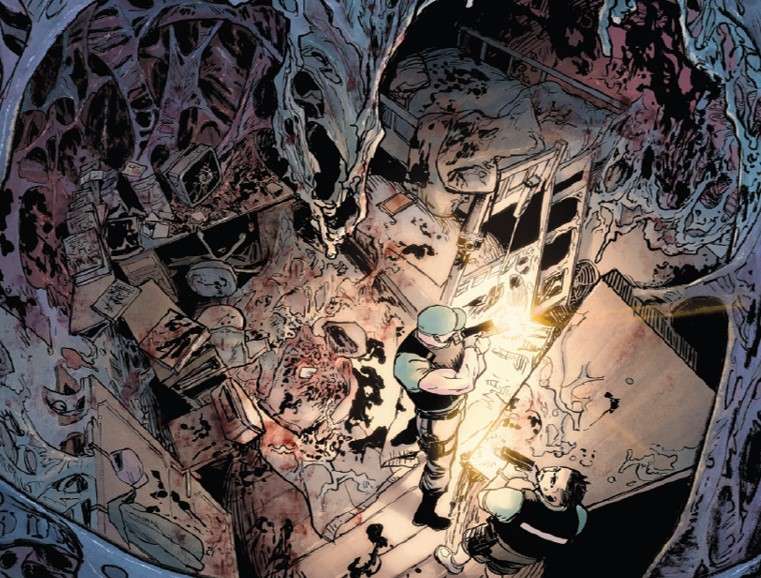
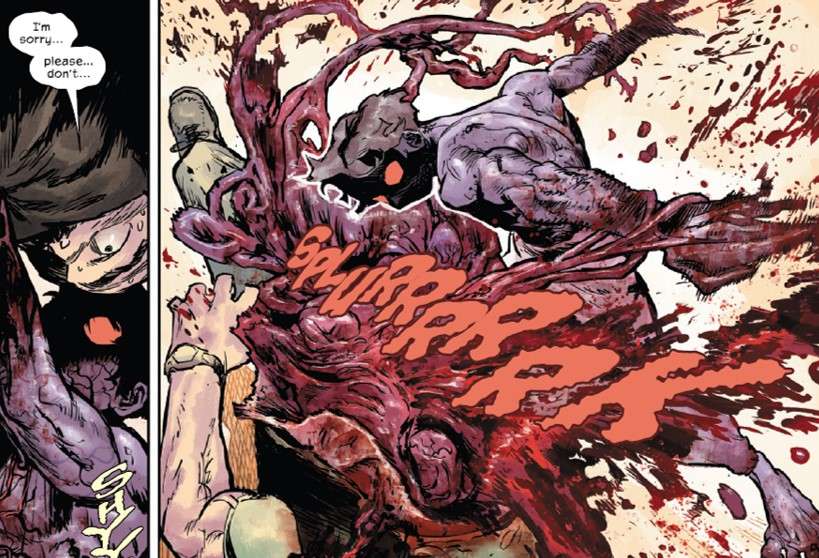
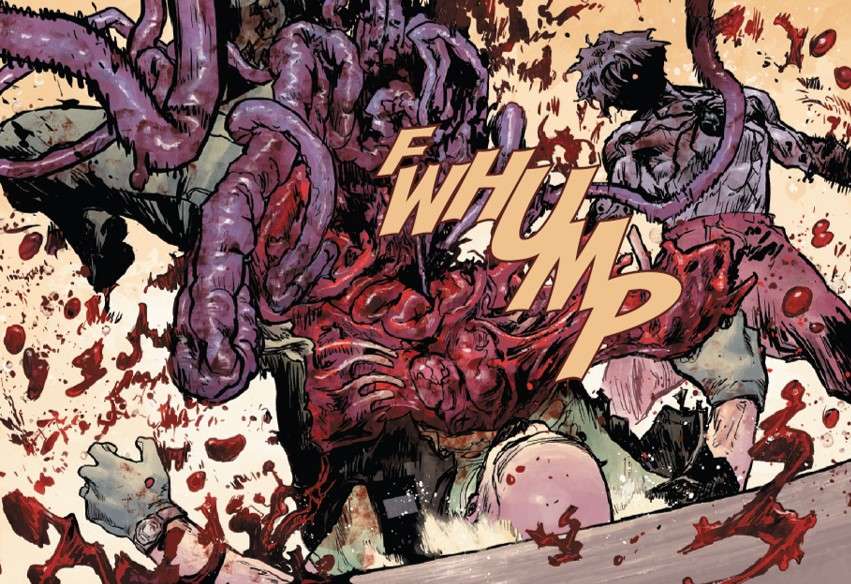
The trip to Peter’s house is where the issue fully earns its horror credentials. What begins as a search turns into an exploration of a home that has been transformed into something wet, organic and deeply wrong. Scietronc’s art is fantastic here. The earlier Oscorp scenes are sterile and controlled; the Parker house looks like biology has staged a hostile takeover.
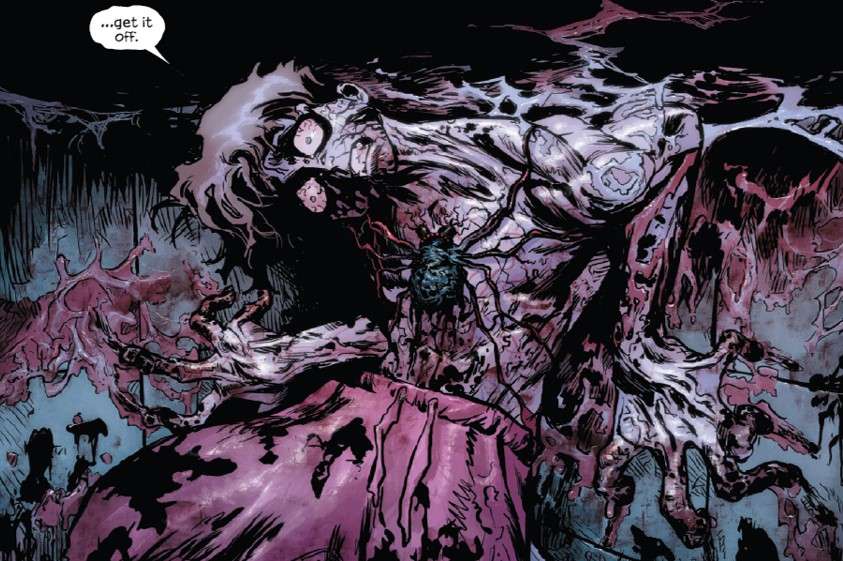
Then Peter speaks: “I signed, Miss Hardy.” That moment is more disturbing than any splash page because underneath the monster is still the eager kid Felicia recruited. He still remembers wanting to do great things. He still believes Oscorp is supposed to help him. Watching that optimism survive inside something barely human gives the violence that follows an actual emotional sting.
Neeraj Menon’s colors push the transformation sequences into bruised purples, diseased reds and near-black shadows, while the issue’s opening black-and-white “Fugitive Peerless” sequence becomes a clever visual rhyme. Peter’s life is beginning to look like the horror story sitting in his own house.
CONS
The tradeoff is that Peter is barely Peter for much of the issue. After issue #1 spent time establishing his personality, ambitions and relationship to science, this chapter mostly observes him from the outside. That works for the horror, but readers hoping to spend more time inside this version of Peter’s head may feel slightly shortchanged.
There is also a heavy chunk of explanation in the Oscorp section. Octavius essentially reconstructs the spider’s entire journey through surveillance footage, and although the information is important, the sequence briefly feels like the villain has prepared a PowerPoint titled “How We Accidentally Created Spider-Man.”
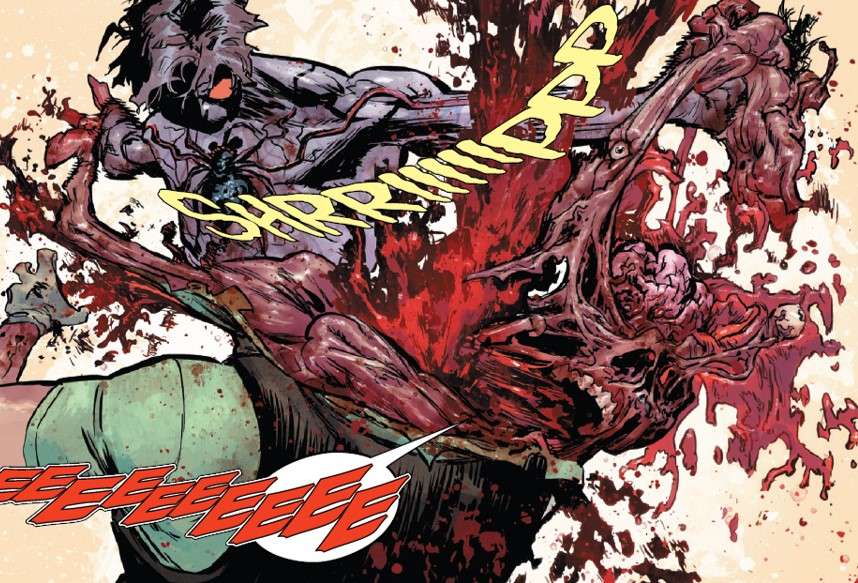
Some of the security characters are also introduced primarily so the monster has people to horribly disassemble. Effective? Absolutely. Deeply layered supporting cast? Perhaps not yet.
FINAL THOUGHTS
What I like most about Midnight Spider-Man is that it understands changing Spider-Man’s genre does not require abandoning what makes Peter Parker tragic. Peter still wants to do something meaningful with his life. He still believes intelligence and ambition can take him somewhere better. He still makes a choice that seems reasonable and discovers the universe has hidden approximately seventeen knives behind it.
Issue #2 simply translates that famous Parker luck into horror.
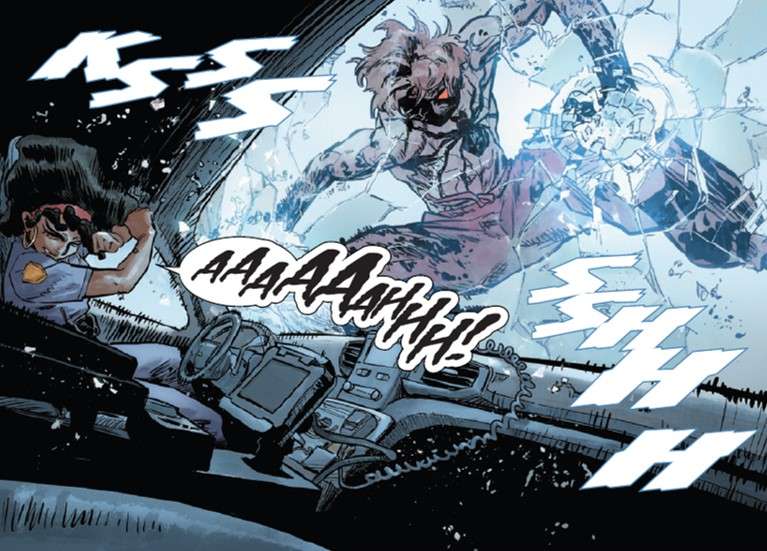
By the time the police arrive at the Parker home and something distinctly spider-shaped launches itself onto a squad car, the book has moved past “dark alternate Spider-Man” into something more interesting. Peter’s powers are not arriving as gifts. They are arriving as symptoms.
And if this is only the metamorphosis stage, I am deeply concerned about what counts as the finished product.
FINAL GRADE: A-
Midnight Spider-Man #2 turns Peter Parker’s origin into a corporate horror story where the spider bite feels less like destiny and more like contamination. Grotesque, tense and beautifully unsettling, it proves this nightmare version of Spider-Man has real bite.