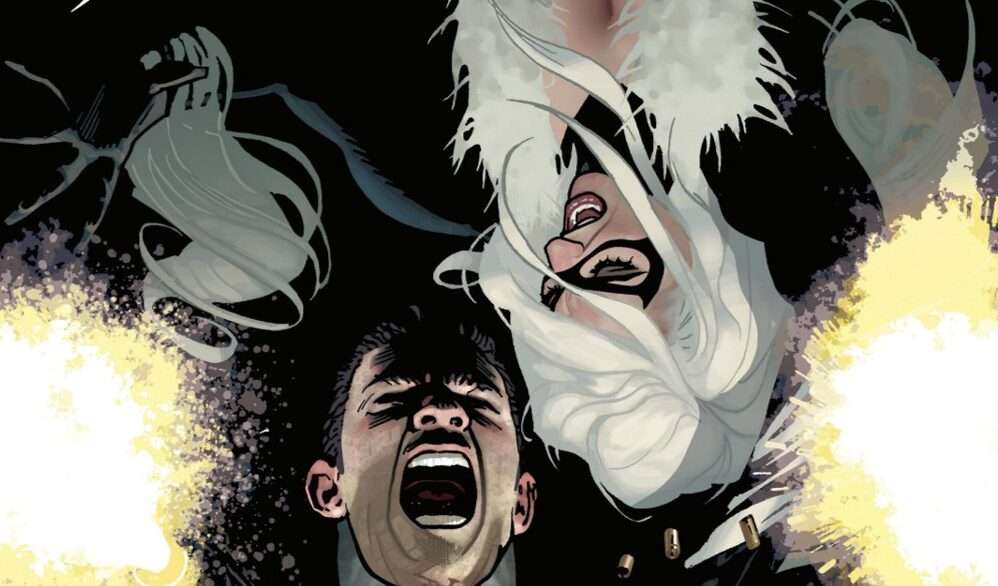
Felicia Hardy has spent most of her life believing she understands luck better than anyone. She has built a career around manipulating it, surviving it, and occasionally weaponizing it against anyone foolish enough to stand in her way.
But Black Cat #11 asks a sharper question: what happens when Felicia’s luck stops feeling like a gift and starts behaving like a moral loophole?
The answer arrives wearing a skull.
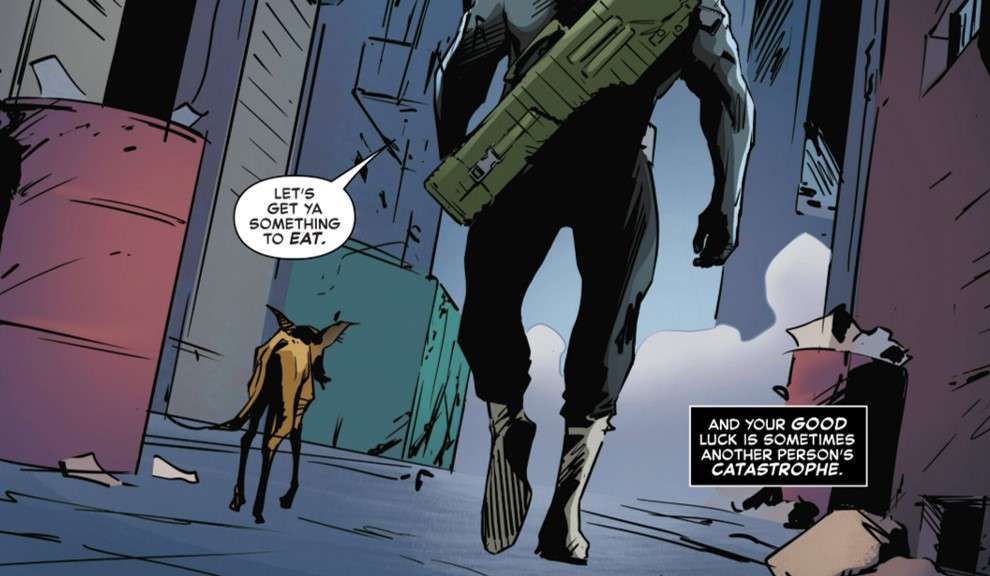
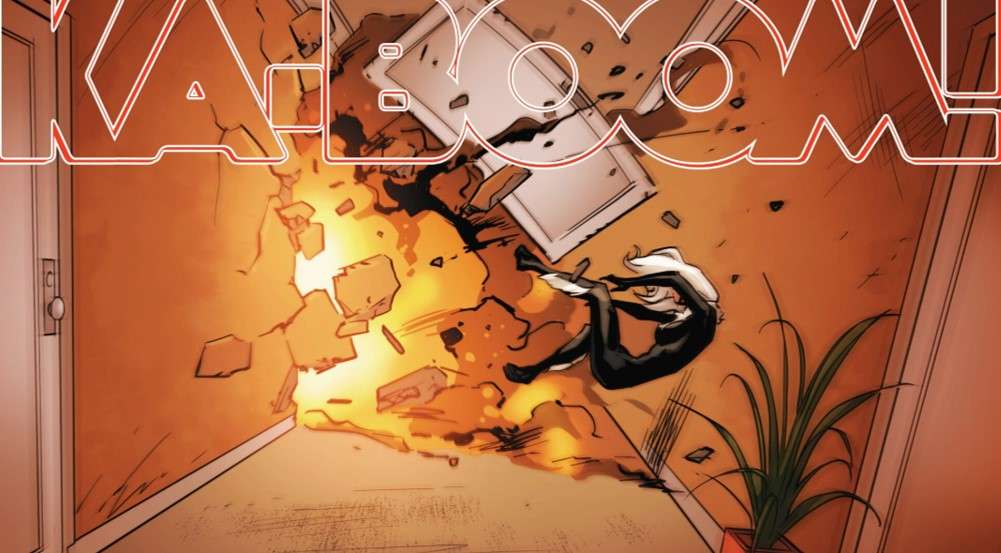
This issue brings Black Cat face-to-face with the Punisher after she accidentally places a formerly stray dog in danger. Felicia initially believes the animal has been killed, sending her into a spiral of guilt and panic. When Frank later attacks her apartment, the misunderstanding escalates into a full-blown confrontation between two people who both believe they understand consequences—and who could not disagree more about what those consequences mean.
What follows is not merely Black Cat versus Punisher. It is a clash between two deeply stubborn worldviews.
THE PROS
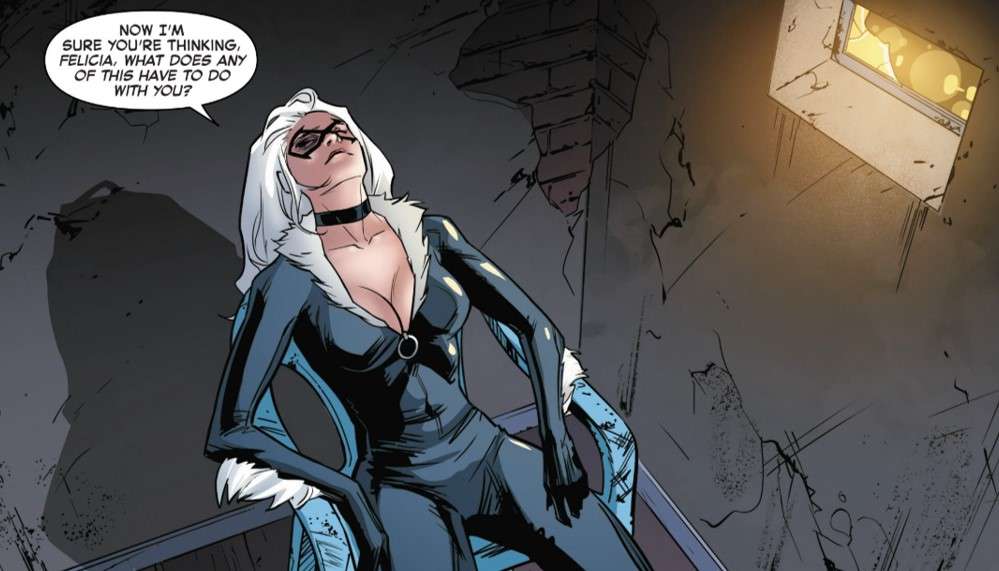
Felicia’s inner conflict gives the issue real weight
The strongest element of Black Cat #11 is the way it frames Felicia’s luck powers as something psychologically complicated rather than simply convenient.
Earlier in the series, Felicia learned that her good fortune is often balanced by disaster falling somewhere else. That idea hangs over every scene here. When she thinks the dog has died after she drove away instead of stopping, she cannot simply dismiss it as collateral damage. She is forced to confront the possibility that her survival may repeatedly come at someone else’s expense.
That gives the issue a surprisingly thoughtful emotional spine.
Felicia has always lived unapologetically. She steals, lies and manipulates because she accepts that actions have consequences. In her mind, the difference between her and people like Frank is not innocence. It is honesty. She knows what she is and does not pretend otherwise.
But once she realizes she may no longer control where those consequences land, her confidence begins to crack.
Her attempted conversation with “Lady Luck” is particularly effective because it makes the power feel almost personal. Felicia has always treated luck like a dance partner. Here, it feels like that partner has stopped listening.
Punisher is an excellent thematic opponent
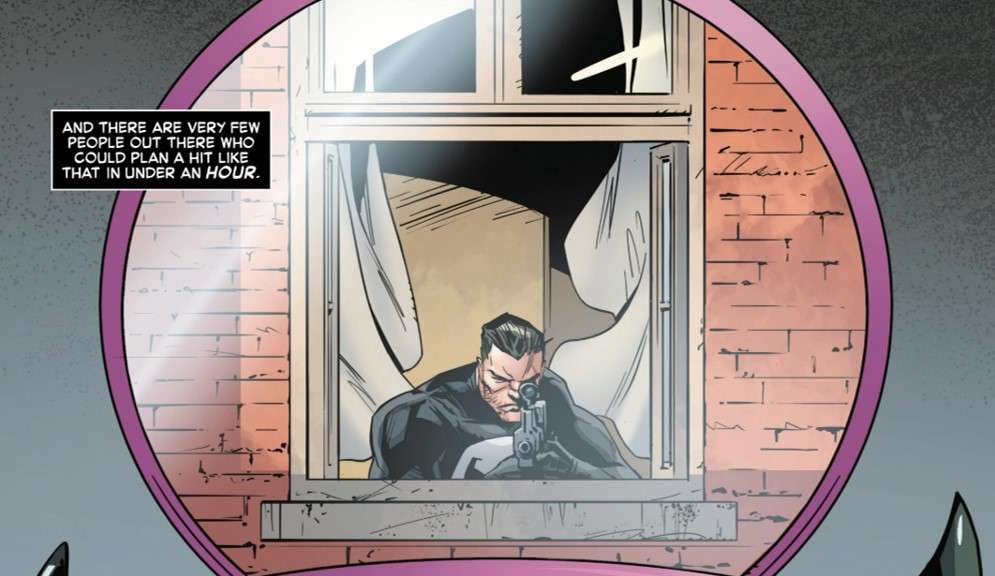
Frank Castle is a smart choice for this story because he represents the exact opposite of Felicia’s philosophy.
Frank believes consequences should be direct. A criminal acts, and Frank punishes them. In his worldview, there should be a clear line between cause and effect. Felicia’s powers disrupt that line completely. She can avoid the bullet, but someone else may be struck by the fallout.
That makes her almost uniquely infuriating to him.
Their argument is more interesting than the physical fight. Frank accuses Felicia of believing she can live without consequences, while Felicia fires back that people like him are the reason the world functions the way it does. She may steal from criminals, but Frank has appointed himself judge, jury and executioner.
Neither character is entirely wrong, which is what makes the confrontation work.
Frank is right that Felicia often escapes responsibility through charm, agility and luck. Felicia is also right that Frank’s certainty allows him to excuse horrific actions as justice.
The tension comes from watching two people recognize uncomfortable pieces of themselves in the other.
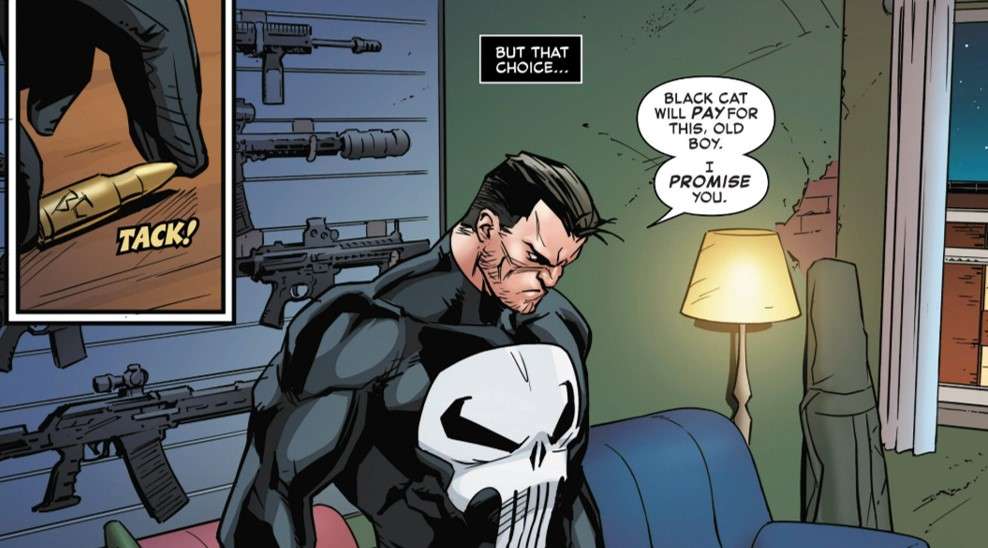
The dog misunderstanding is ridiculous in exactly the right way
The issue’s central misunderstanding could easily have felt cheap, but it works because it is handled with genuine emotional commitment and comic-book absurdity.
Felicia believes Frank killed the dog. Frank believes Felicia selfishly left it injured. Both become furious for reasons that reveal something important about them.
Frank, despite his brutality, immediately takes the dog to an emergency veterinarian. Felicia, despite fleeing the scene, remains shaken because she genuinely cares and knows she made the wrong call.
The revelation that the dog survived does not erase Felicia’s guilt. Instead, it complicates it. She made the selfish choice, but the worst outcome did not happen. Was that luck? Did someone else pay for it? Or did Frank simply do the decent thing?
The issue wisely leaves those questions hanging.
The action is easy to follow and full of personality
The artwork gives the confrontation a clean, energetic rhythm.
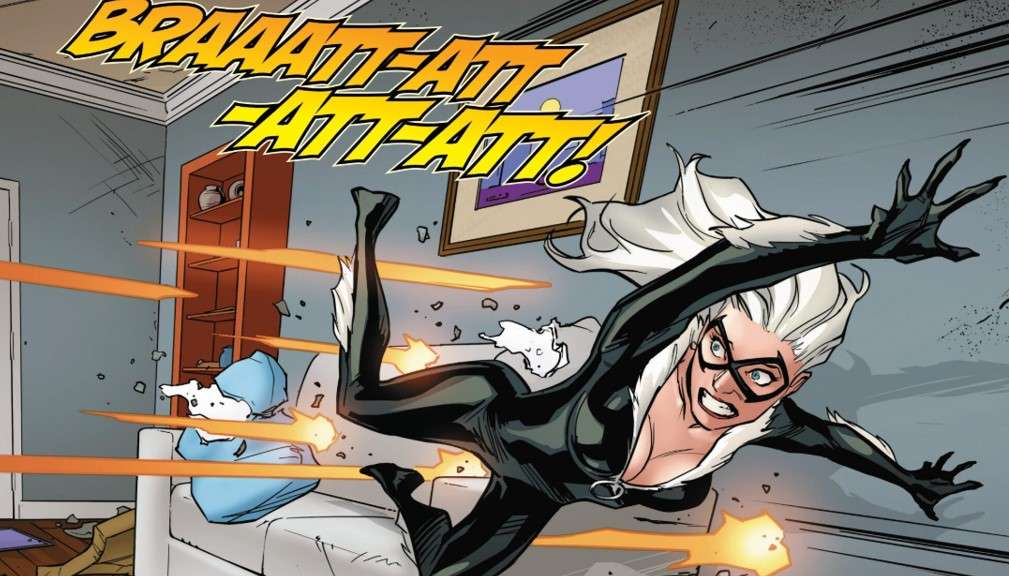
Felicia’s movements are loose, acrobatic and improvisational. Frank is rigid, direct and heavily armed. Even without dialogue, their fighting styles communicate who they are.
The recurring gag of Felicia trying to tilt probability against him is especially fun. She hopes he will trip, sneeze or suffer some random mishap, but nothing happens. For someone who has spent years trusting instinct and chance, that failure feels more alarming than the bullets.
The fight also gives Felicia several great visual moments, particularly when she launches herself from the building and attacks Frank from above. It captures the swagger that makes Black Cat fun without diminishing the danger.
THE CONS
The issue repeats its central idea a little too often
The theme of consequences is strong, but the script occasionally circles it more than necessary.
Felicia and Frank both restate their positions several times: she insists she accepts consequences, he insists she avoids them, and both accuse the other of hypocrisy. The repetition does reinforce their ideological stalemate, but a few exchanges could have been trimmed without losing the point.
The best moments are the quieter ones—the dog, Felicia’s uncertainty and the failure of her luck—not the panels where the characters explicitly explain the theme.
Punisher’s presence slightly overwhelms Felicia’s larger story
Frank is an effective guest star, but his personality is so forceful that parts of the issue begin to feel like a Punisher story told from Felicia’s perspective.
That is not necessarily a major flaw, especially because Felicia remains the emotional lead. Still, the ongoing mystery surrounding her malfunctioning luck only advances slightly. We learn that Frank appears immune to both her persuasion and probability manipulation, but the issue ends before exploring why.
It is a compelling hook, though readers hoping for bigger answers may feel the chapter stops just as the main mystery becomes more interesting.
FINAL VERDICT
Black Cat #11 is one of those issues that takes a seemingly simple superhero misunderstanding and uses it to explore something more meaningful.
Felicia and Frank are entertaining together because they are both deeply self-aware and completely blind in different ways. Felicia knows she is a thief but does not always see how often luck shields her from accountability. Frank understands punishment but rarely questions who gave him the right to decide it.
The issue does not resolve that argument, nor should it.
More importantly, it pushes Felicia into unfamiliar territory. Her luck is no longer dependable. Her charm does not work on Frank. Her attempts to manipulate probability fail. For perhaps the first time in a long while, Black Cat cannot steal, flirt or luck her way out of the problem.
And that may be the most dangerous situation Felicia Hardy has faced yet.
Rating: 8.5/10
A sharp, entertaining clash of personalities that uses Punisher’s arrival to deepen the mystery—and the moral cost—of Black Cat’s changing powers.