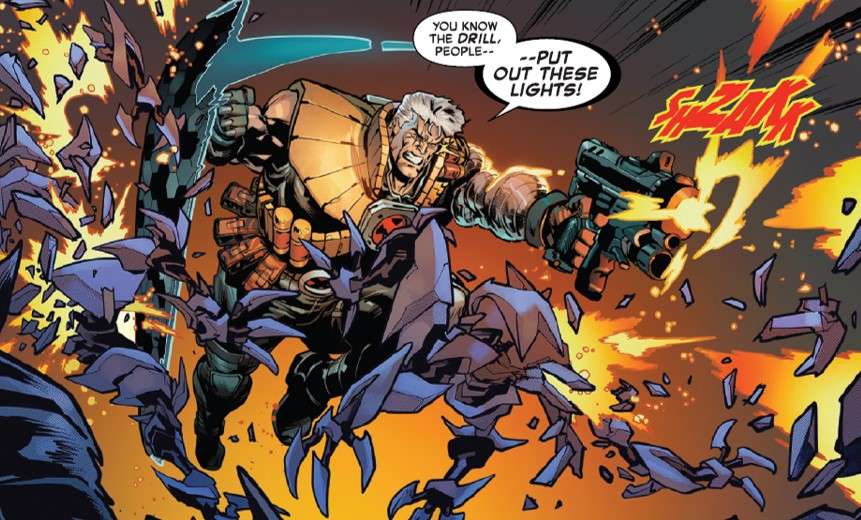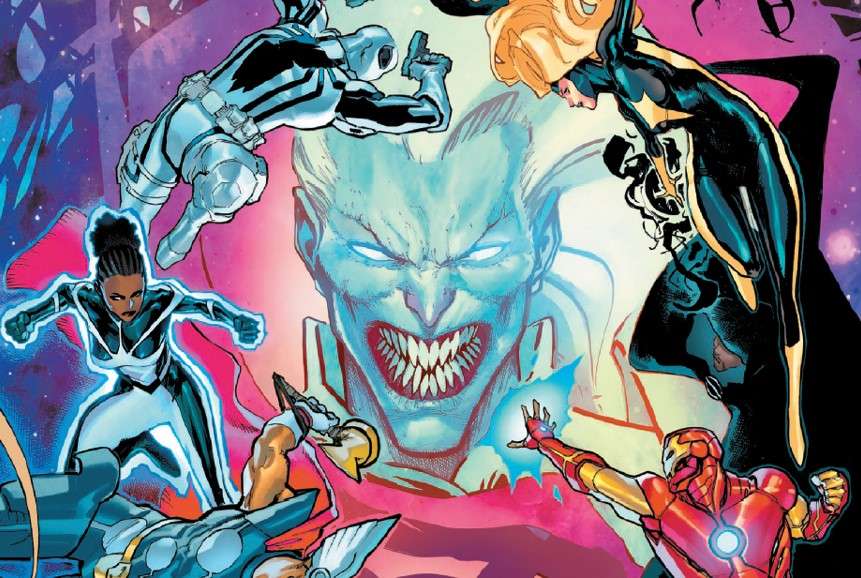
When the universe is being fought over by a newly crowned Queen in Black and a former god of darkness who has somehow reinvented himself as the God of Light, the sensible response is apparently to split Earth’s heroes into two teams, throw them into space, and hope Tony Stark’s statistics are better than the odds.
That is the wonderfully comic-book logic powering Queen in Black: Defenders of Light and Dark #1. Al Ewing and Tom Waltz take a massive cosmic crisis and frame it almost like the most dangerous team-building exercise imaginable. One squad is sent against Hela’s dark forces, the other against Knull’s blinding army, and both immediately discover that “light” and “dark” are not necessarily the same as “good” and “evil.”
PROS
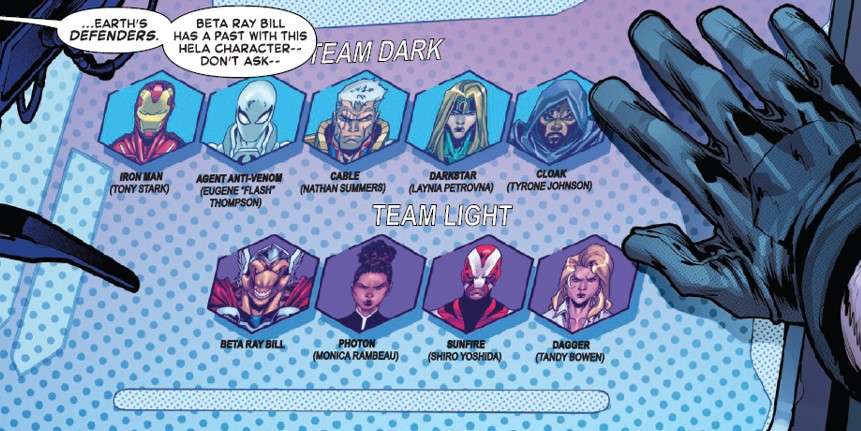
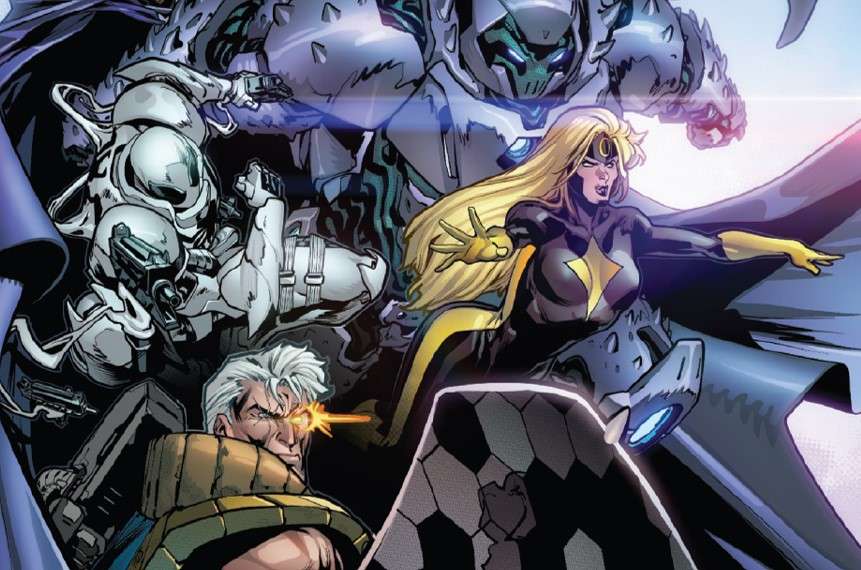
The best idea in the issue is the deliberately odd roster. Team Dark brings together Iron Man, Agent Anti-Venom, Cable, Darkstar and Cloak, while Team Light features Beta Ray Bill, Photon, Sunfire and Dagger. It feels less like the Avengers assembling and more like someone hit “randomize” on a Marvel video game—and that is exactly why it works. Each group has enough power to look impressive, but enough clashing personalities and abilities to keep the mission unstable.
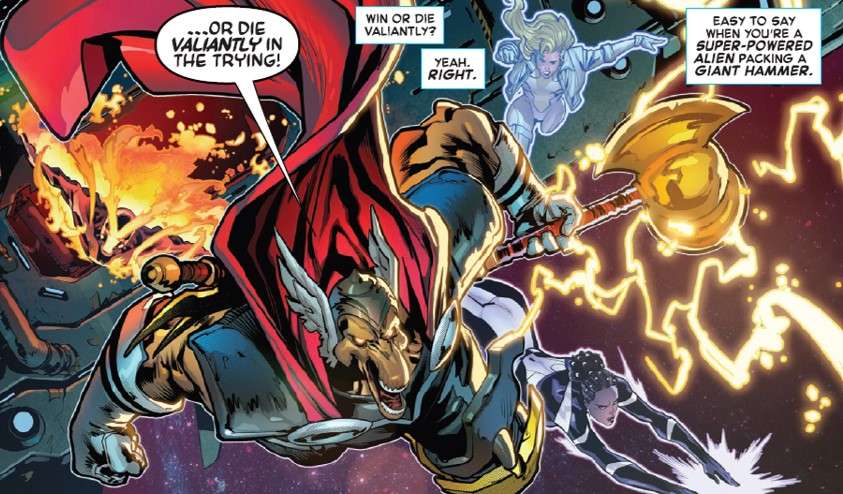
The banter keeps the cosmic spectacle from becoming too heavy. Cable and Tony arguing over statistics, Bill casually treating impossible odds as another glorious Tuesday, and Dagger internally wondering how she is supposed to process any of this give the story a lively pulse. The scale may be universe-shaking, but the characters are still annoyed, nervous, sarcastic and very human.
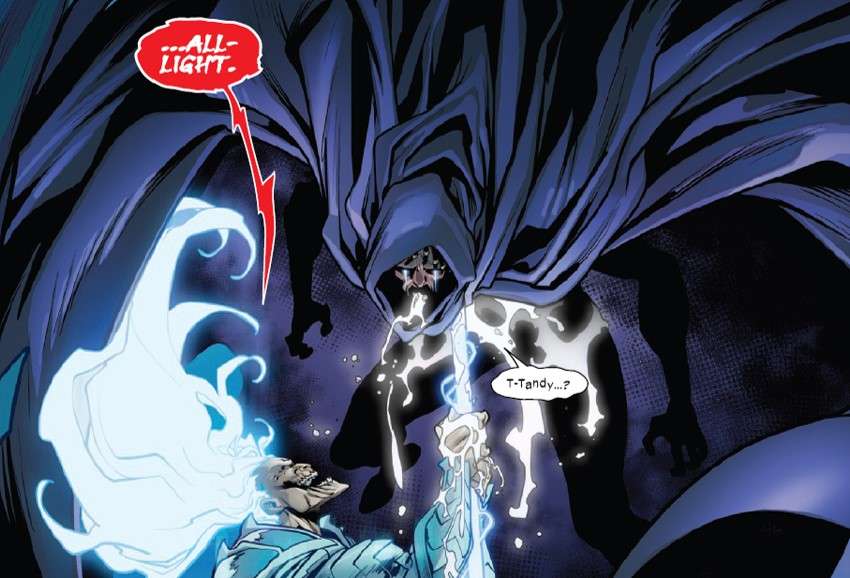
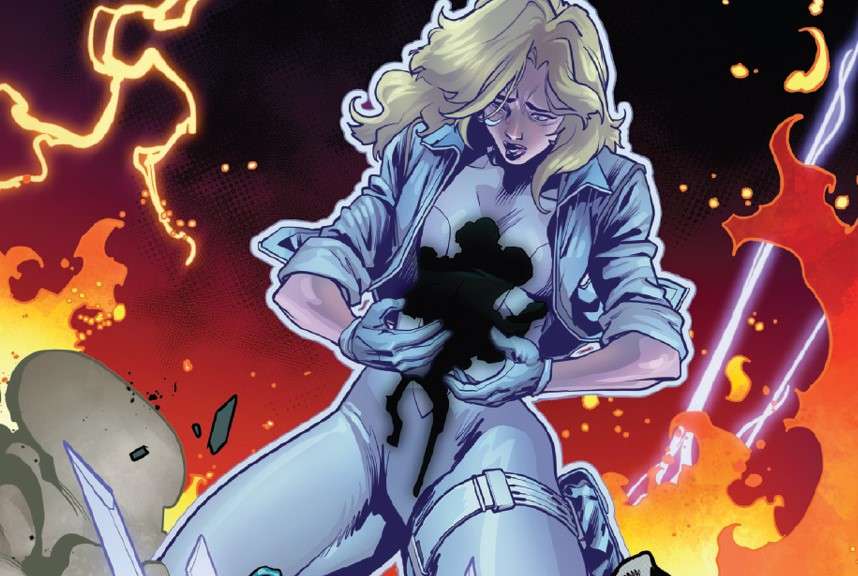
Splitting Cloak and Dagger between the two teams is also a smart emotional choice. On paper, it makes strategic sense. In practice, it creates a quiet thread of anxiety running beneath all the explosions. Dagger spends much of the issue trying to keep up with heroes whose powers look built for interstellar war, while Cloak becomes the member most dangerously suited to attract Knull’s attention. By the final pages, their separation stops being a clever tactical arrangement and becomes the issue’s sharpest emotional weapon.
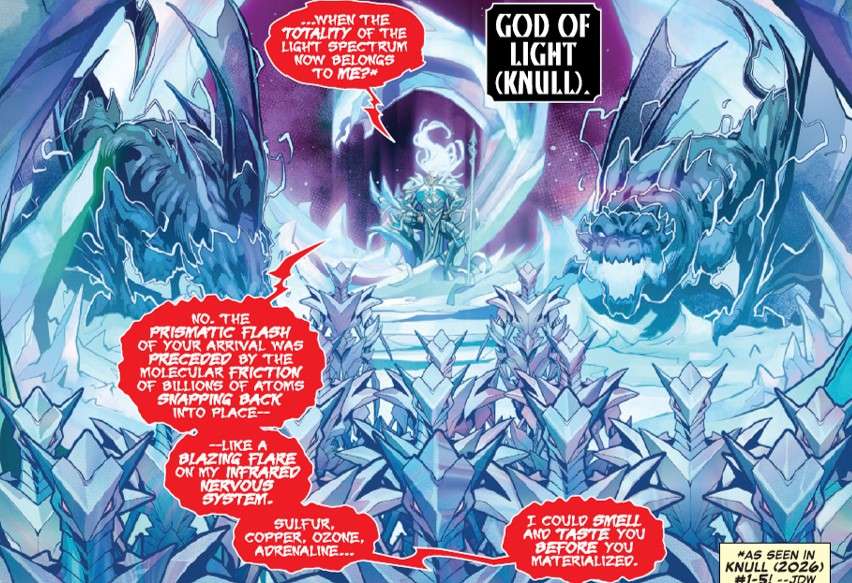
The parallel battles are visually distinct and easy to follow. Hela’s side is all red-and-black symbiote horror, burning skies and infected armies. Knull’s territory is an icy cathedral of impossible white light, populated by crystalline soldiers and enormous luminous dragons. Zé Carlos gives both battlefields their own personality, while Fer Sifuentes-Sujo’s colors make the contrast feel almost elemental. The book looks like fire and frost started a bar fight in deep space.
Beta Ray Bill’s confrontation with Tyr is another welcome surprise. Tyr does not merely attack him; he appeals to Bill’s connection to Asgard and offers him a path back to lost glory. Bill’s temptation is brief, but it gives their clash more weight than a standard hammer-versus-sword encounter. It also reinforces the issue’s central idea: both Hela and Knull know how to turn a hero’s deepest longing into a weapon.
Knull, meanwhile, is genuinely unsettling. His transformation into a god of light has not made him nobler—it has simply given his cruelty a brighter color palette. His attack on Cloak is intimate, arrogant and frightening, and the final image of Dagger lands harder because the rest of the issue has been so energetic and playful.
CONS
The large cast means several heroes are present more as useful powers than fully developed personalities. Agent Anti-Venom, Darkstar and Sunfire all get moments to look cool, but not enough room to leave a major impression. The issue is juggling two teams, two cosmic rulers, multiple armies and an Asgardian subplot, so some characters inevitably become action figures in a very expensive toy box.
This is also very much a first chapter. The mission begins, the teams get overwhelmed, hidden agendas emerge, and then the story stops at its most painful moment. The cliffhanger is effective, but readers looking for a self-contained adventure will not find one here.
OVERALL: B+ FOR BLACK
Defenders of Light and Dark #1 is loud, colorful and enjoyably strange—a cosmic war story that knows the fun comes from throwing mismatched heroes into impossible situations and watching the plan fall apart. It delivers giant dragons, symbiote armies, Asgardian drama, weaponized light and enough team dysfunction to make the Avengers’ group chat explode.
Most importantly, beneath all that spectacle is a simple emotional hook: Cloak and Dagger were separated because it was supposedly the smart move. By the end, smart no longer feels safe.
A strong, energetic opening that proves the brightest corners of the universe can still hide the darkest surprises.