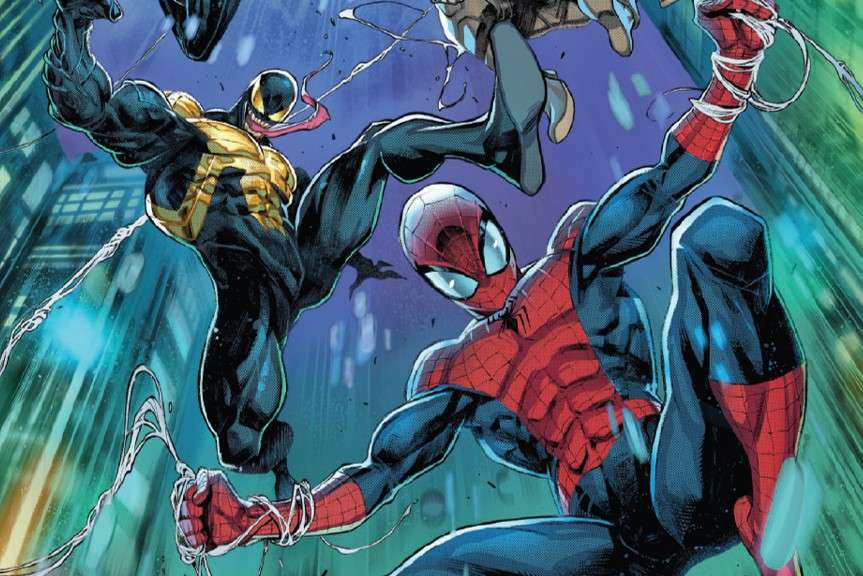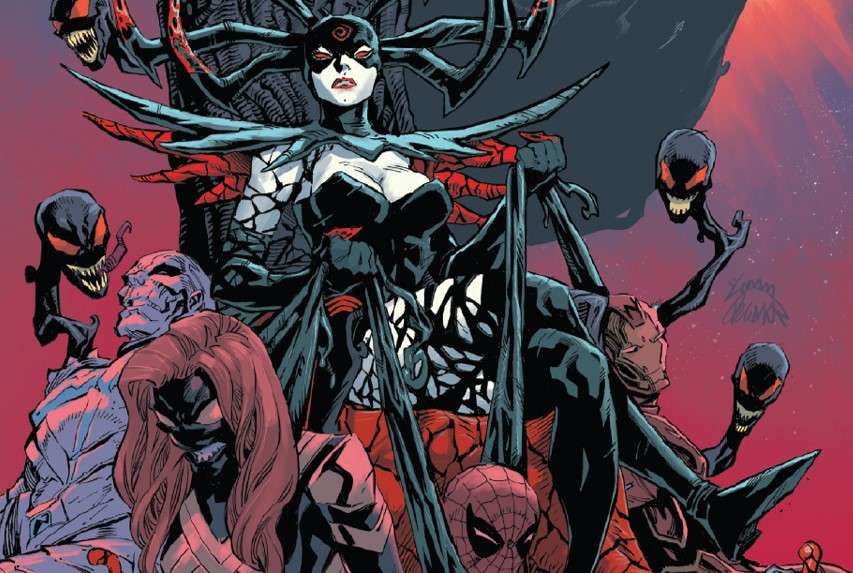
Queen in Black #1 wastes no time pretending this will be a quiet little neighborhood adventure. Al Ewing takes the current symbiote mythology, fires it through a cosmic cannon, and drops the result directly onto Earth. Knull is no longer the familiar god of darkness. He has been twisted into a radiant King in White, while Hela has claimed the opposite throne as the new Queen in Black. Naturally, both of them decide Earth is the perfect place to settle their increasingly messy divine disagreement.
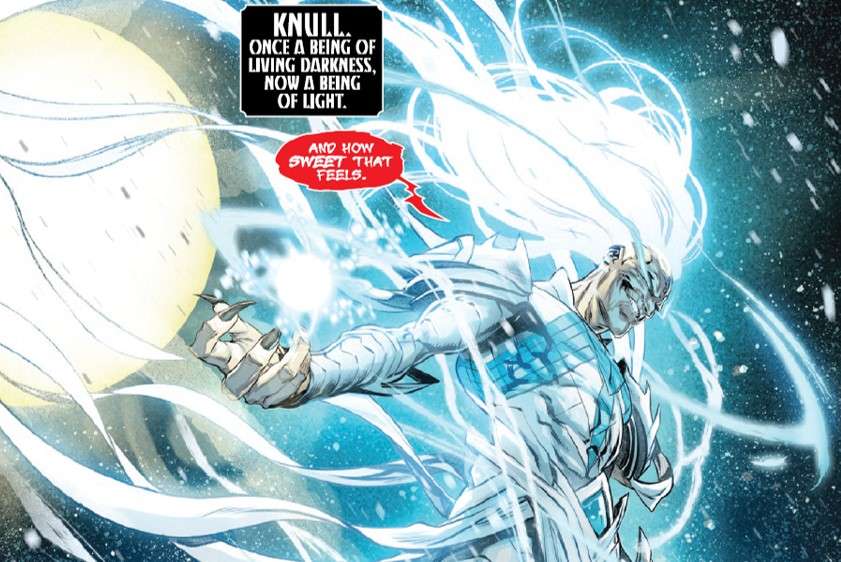
The result is a loud, colorful and proudly ridiculous opening chapter—and I mean that as a compliment. This is Marvel cosmic storytelling with the volume turned up, where armies appear in orbit, gods rewrite reality, and Spider-Man still finds time to make jokes while everyone around him discusses the possible end of the world.
PROS
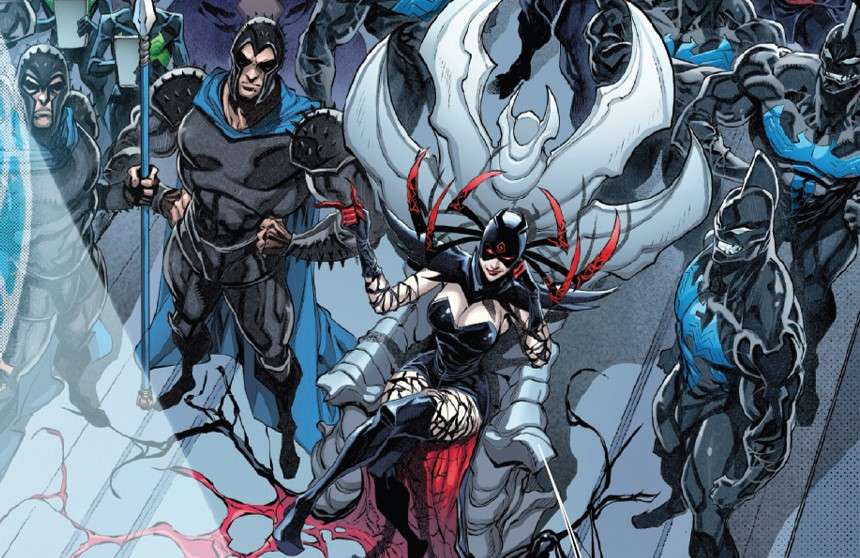
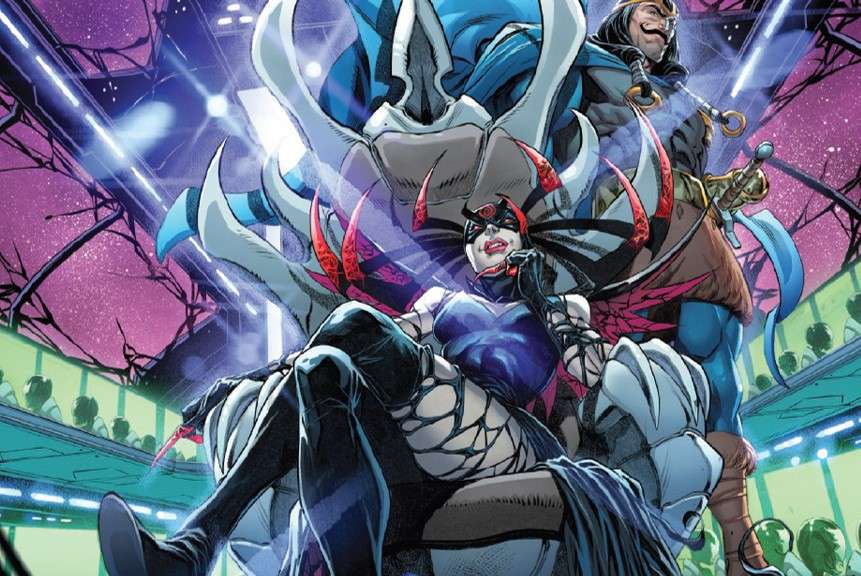
The strongest idea here is the reversal at the heart of the event. Knull, the living embodiment of darkness, now weaponizes light, creating crystalline beings and speaking like a terrifying heavenly conqueror. Hela, meanwhile, commands the living abyss as Queen in Black. It is visually clever and immediately gives the crossover its own identity. This is not simply King in Black again with a different logo. The familiar pieces have been rearranged into something stranger.
Spider-Man may not be the sole lead, but Ewing gives him a meaningful place in the chaos. Tony Stark puts Peter in charge of the symbiote-powered heroes in the field, which includes Mary Jane as Venom, Dylan Brock as Toxin and Flash Thompson as Anti-Venom. That works because Peter is the person in the room with the longest, most complicated history with symbiotes. He understands that they can be dangerous, but he also knows they are not automatically monsters.
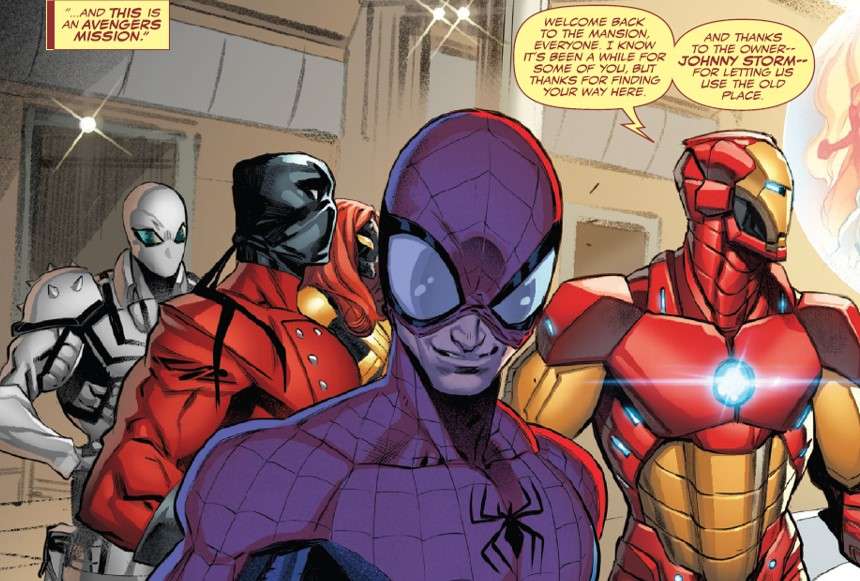
Peter’s interactions with MJ are especially welcome. Tony remains understandably cautious about the Venom symbiote, but Peter immediately vouches for Mary Jane. There is trust between them, and the issue does not need a long speech to make it clear. MJ is also presented as confident and capable rather than someone waiting to be rescued. Seeing Spider-Man, Venom-MJ, Black Cat and the rest of the Spider-Friends swing into battle gives the issue exactly the Spider-flavored energy I was hoping for.
The banter keeps the enormous cast from becoming too stiff. Even when the exposition gets heavy, there is usually a joke or a character beat waiting nearby.
Iban Coello, Zé Carlos and Guru-eFX make the issue look massive. The white-blue glow surrounding Knull sharply contrasts with Hela’s black, red and magenta energy. The invasion spreads across landmarks and battlefields, and several pages feel less like normal comic panels and more like cosmic heavy-metal posters. Beta Ray Bill’s entrance, the global symbiote assault and the full-page Spider-team charge are all big visual moments.
CONS
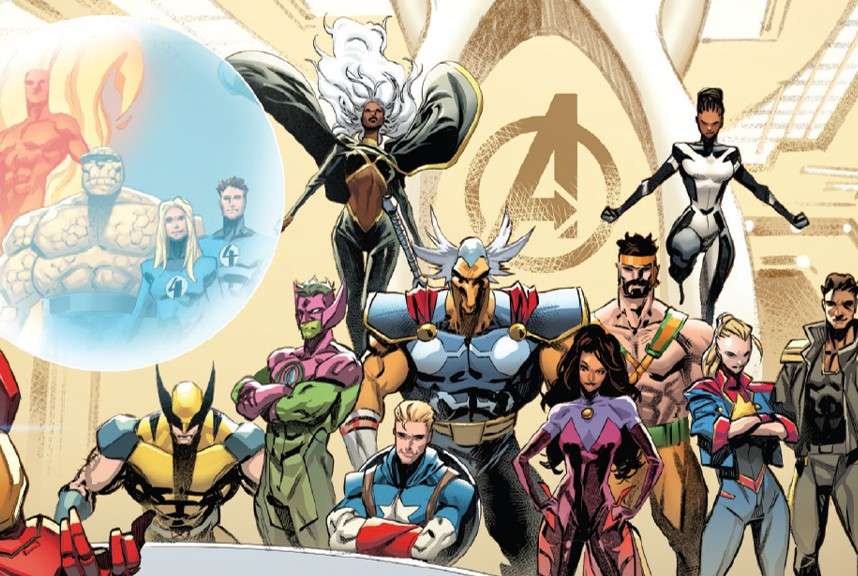
The biggest weakness is also part of the fun: this comic is crowded. Very crowded. The issue moves through Knull, Hela, the Avengers, the Fantastic Four, Skrulls, Asgardians, symbiote legions and several smaller teams in rapid succession. Readers who have not followed the recent Venom mythology may feel as though they arrived at a party where everyone else has already been talking for three hours.
Some scenes also function more as setup than story. Characters explain alliances, powers and contingency plans before the invasion begins, so the middle can occasionally feel like a very attractive briefing document. The issue becomes much more exciting once the fighting starts, but it takes a while to place every cosmic chess piece on the board.
FINAL THOUGHTS: THIS ISSUE WAS QUEENLY!
Queen in Black #1 is not subtle, intimate or especially beginner-friendly. It is a giant cosmic toy box being tipped onto the floor—and that is exactly why it works. Knull’s transformation into a god of light is wonderfully bizarre, Hela looks every inch the ruler of the living abyss, and Spider-Man brings a human, humorous center to a story filled with celestial-scale insanity.
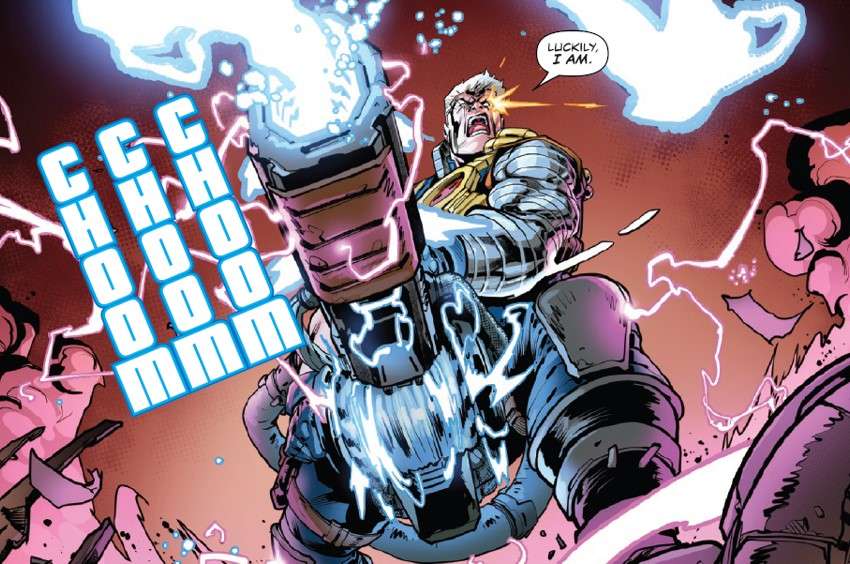
The final reveal of a huge “symbiote intelligence,” created from Klyntar and Kree technology, is the perfect kind of ridiculous cliffhanger. Apparently two invading god-armies were not enough. Now there is also a giant floating symbiote brain-monster joining the party.
This first issue is busy, messy and occasionally overloaded, but it is also energetic, imaginative and genuinely fun. For a cosmic crossover about light, darkness and goo-covered armies from space, that feels like a very promising start.