Spider-Man has fought ninjas, aliens, goblins and clones. Unfortunately, none of them had a podcast.
There are approximately 47 problems in Peter Parker’s life right now.
Aunt May doesn’t remember him properly. His newly discovered cousin tried to replace him in her heart. He has alien roommates. Thousands of people have just died overseas following a superhuman battle Peter believes he should have been there to help prevent.
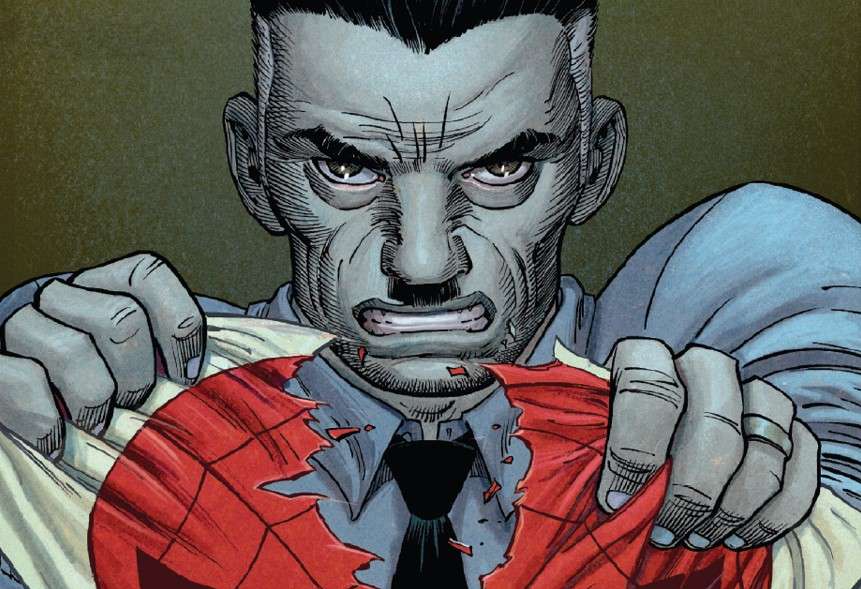
And now J. Jonah Jameson has discovered engagement metrics.
God help us all.
Amazing Spider-Man #1003 smartly steps away from the intensely personal slugfest of the previous issue and asks a bigger question: what happens when the world starts deciding that maybe Spider-Man and everyone like him are part of the problem?
PROS
Joe Kelly’s strongest choice here is making Peter’s guilt the emotional doorway into a much larger crisis.
The destruction of Plesetsk has left tens of thousands dead, and Peter cannot shake one thought:
He was supposed to be there.
That is vintage Spider-Man psychology.
Nobody needs to blame Peter because Peter Parker has already assembled an entire prosecution team inside his own head.
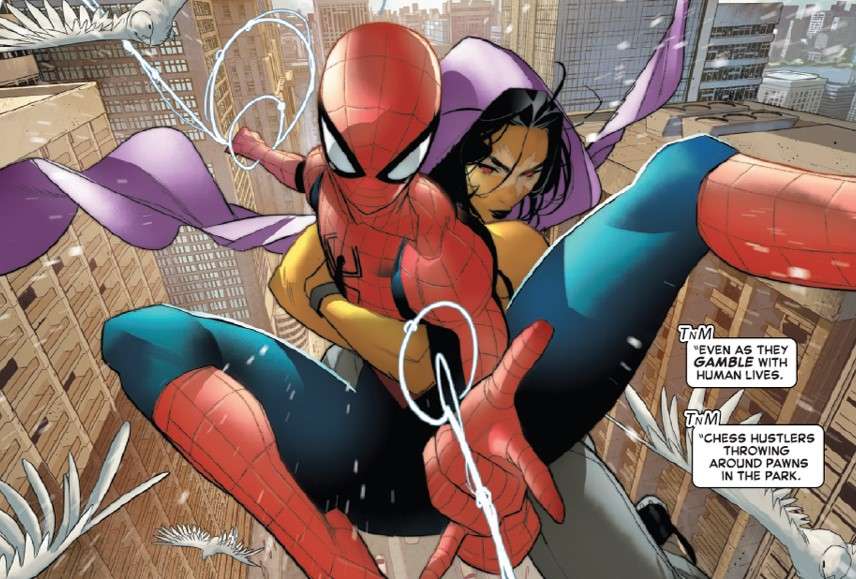
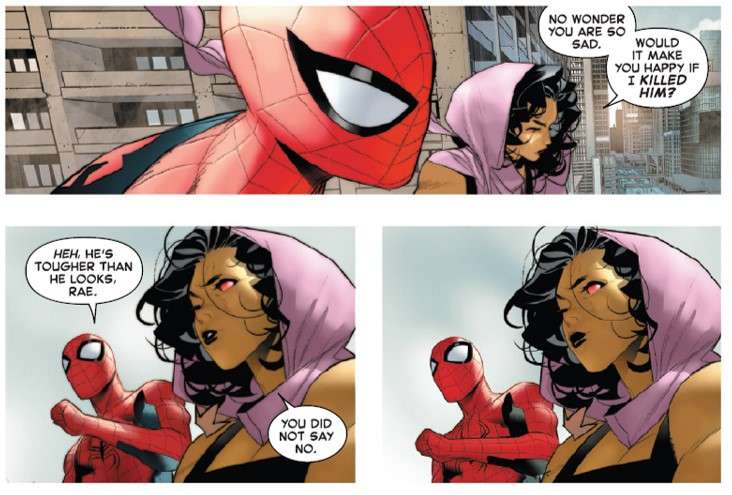
Raelith wisely recognizes it immediately. Peter tries to leave the apartment alone, insisting he needs to check on something, but she follows because she realizes what he actually needs is not another mission.
He needs somebody beside him.
Their scenes are among the issue’s best. Raelith is still wonderfully alien in the most literal sense, but her outsider perspective lets Kelly examine humanity’s reaction to tragedy without making her feel like a walking exposition machine.
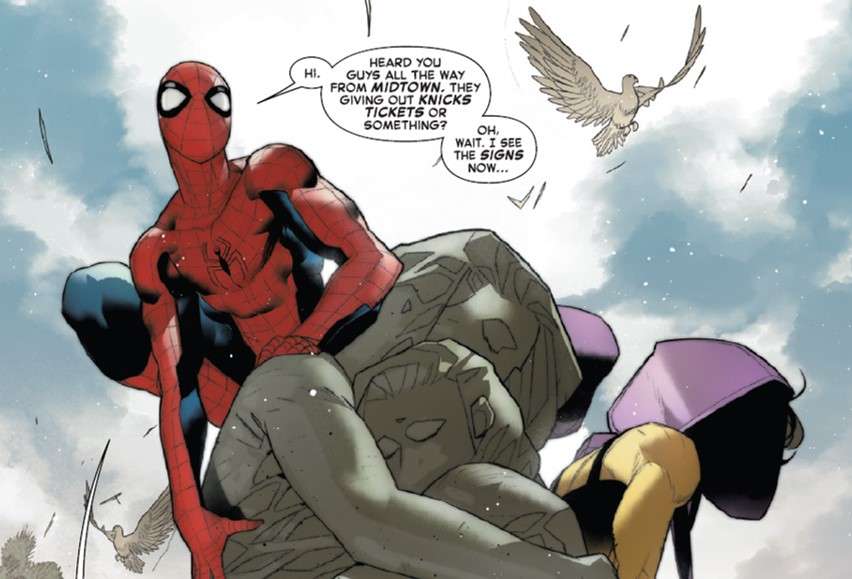
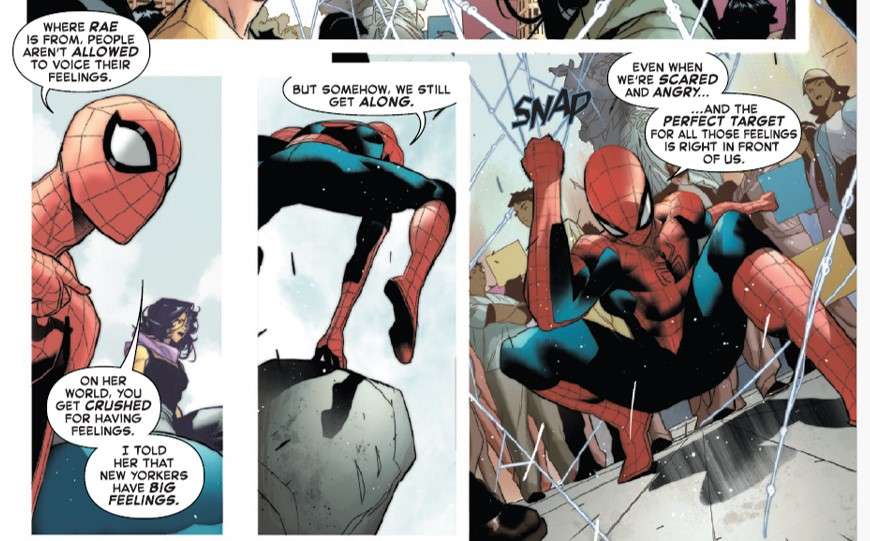
Peter takes her to the memorial, where New Yorkers are frightened, angry and looking for someone to blame.
Which brings us to Jonah.
The opening flashbacks establish something unexpectedly interesting: Jonah had actually been moving away from his old Spider-Man-is-a-menace routine.
He knows Peter is a hero.
Then Plesetsk happens.
Suddenly, fear sells.
Jonah’s podcast audience explodes as the conversation shifts from accountability to sweeping condemnation of superhumans. One moment he is pushing back against simplistic rhetoric; shortly afterward, the numbers climb as he starts feeding the audience exactly what it wants.
Watching Jonah realize that outrage is good for business is painfully believable.
Spider-Man’s greatest enemy may finally have been discovered:
the algorithm.
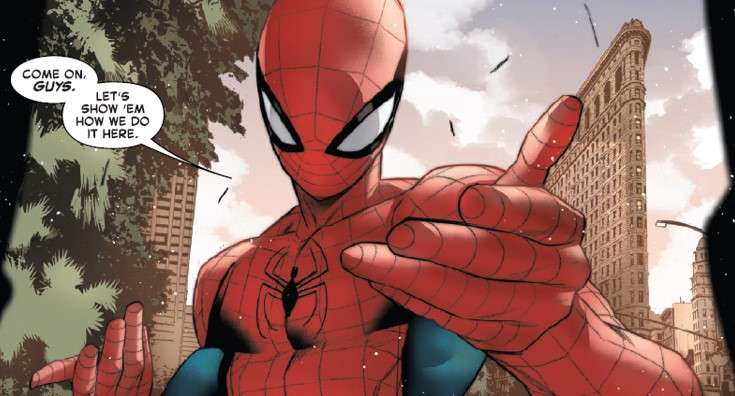
Peter’s reaction at the memorial is equally important. He doesn’t deliver a giant superhero speech. He listens. He acknowledges that people are scared and angry. Then he literally puts himself between opposing sides and tries to keep everyone from tearing each other apart.
That is Spider-Man.
Not punching the loudest person.
Not demanding gratitude.
Helping.
Simone Di Meo sells that beautifully. His layouts have a restless energy throughout the issue, especially whenever public opinion begins crashing into Peter’s personal world. The huge memorial sequence feels open and almost peaceful while still carrying this uncomfortable tension underneath everything.
Edgar Delgado’s colors help enormously too. The burning orange nightmare of Plesetsk gives way to the softer daylight of New York, making the tragedy feel like a shadow hanging over otherwise ordinary life.
CONS
The downside is that Amazing Spider-Man #1003 occasionally becomes Amazing Spider-Man Presents: Several Other Things Happening Simultaneously.
Luke Cage’s political dilemma, May and Cormac, the material involving Maira, Jonah’s media arc and Peter’s story are all competing for space.
Most of it is interesting.
Not all of it feels equally necessary right now.
The political commentary can also get pretty blunt. Fear of superheroes, government overreach, pundits exploiting tragedy, politicians responding to public panic—Kelly is juggling several ideas, and occasionally the characters stop sounding like people and start sounding like positions in a debate.
Then again, Jonah becoming intoxicated by suddenly enormous viewership?
Sadly, no notes.
FINAL THOUGHTS
This is fundamentally a transition issue, but it understands that transition does not have to mean filler.
Peter begins the story blaming himself for not being somewhere.
He ends it by choosing to be exactly where he is needed.
That matters.
And just when Jonah seems ready to ride his newfound outrage machine into the sunset, the final pages remind us that shouting about Spider-Man can occasionally attract the attention of considerably worse spiders.
Whoops.
Kelly is widening the scope of Peter’s world after #1000 without losing the character underneath the costume. The real conflict here isn’t Spider-Man versus public opinion.
It is Peter Parker trying to decide what responsibility looks like when everyone around him has a different definition of it.
That is fertile ground.
Just maybe don’t read the comments, Pete.
FINAL GRADE: B+
A sharp, uneasy Spider-Man story that turns public fear into Peter Parker’s newest supervillain. The action takes a back seat, but Peter’s guilt, Jonah’s addiction to outrage and a city looking for someone to blame make this a smart reminder that sometimes Spider-Man’s hardest job is simply standing between angry people.