
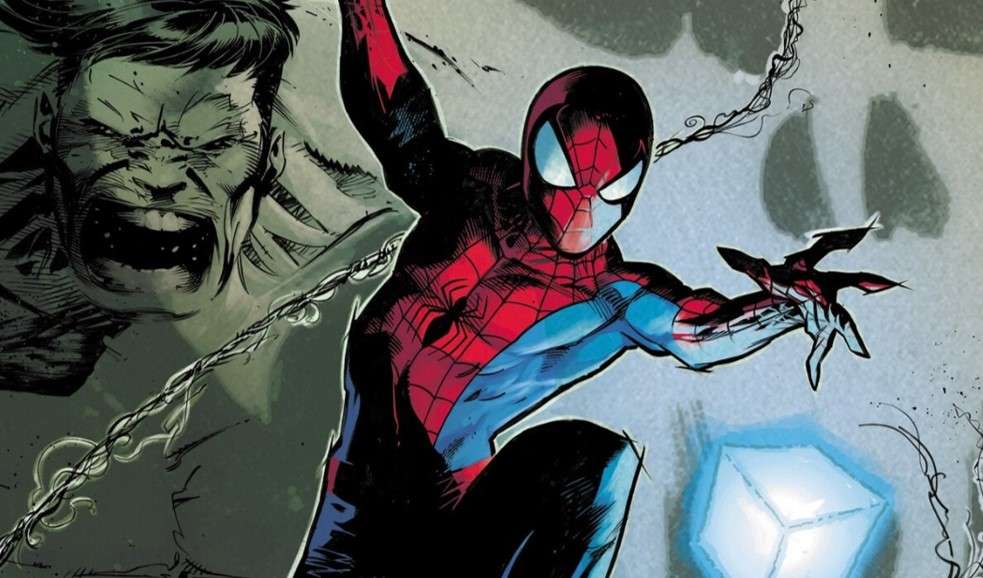
The Long Road Starts Somewhere Unexpected
A new Spider-Man story called Long Way Home might lead readers to expect Peter Parker swinging through Manhattan, worrying about rent, relationships, and whichever supervillain has decided to ruin his week.
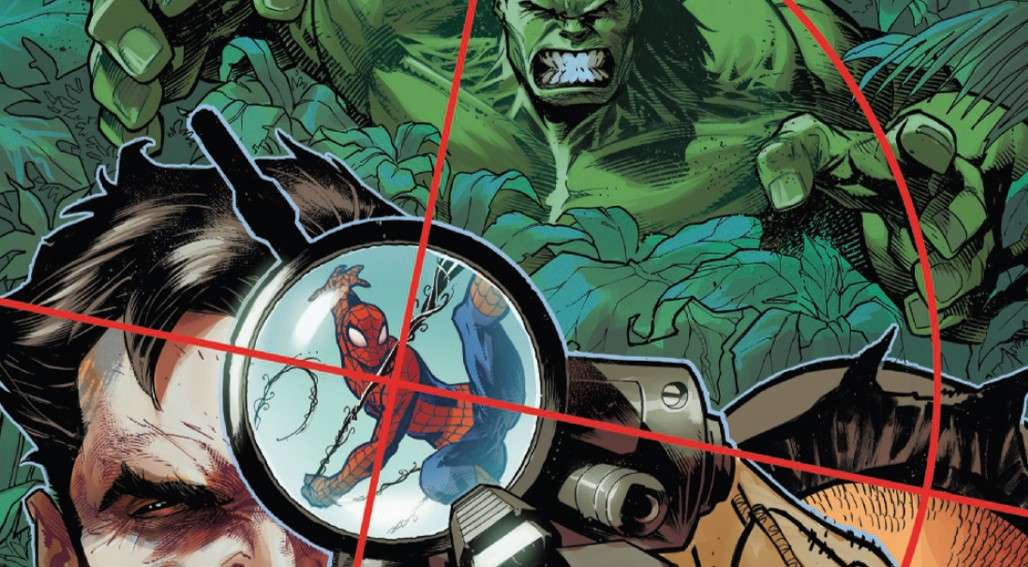
Instead, this opening issue drops us into a moonlit jungle with Frank Castle, a heavily armed team of former operatives, an A.I.M. facility, a stolen Cosmic Cube, a small army of Hydra soldiers—and one extremely angry Hulk.
That is quite a detour before Spider-Man has even packed his bags.
But it is also what makes Spider-Man: Long Way Home #1 such an intriguing beginning. Rather than immediately explaining where Peter is going or why the journey matters, the issue builds a mystery around Frank Castle and an impossible incident that Spider-Man is suddenly expected to investigate. It feels less like the opening chapter of a traditional Spider-Man adventure and more like the first act of a conspiracy thriller whose real shape has yet to reveal itself.
THE STORY
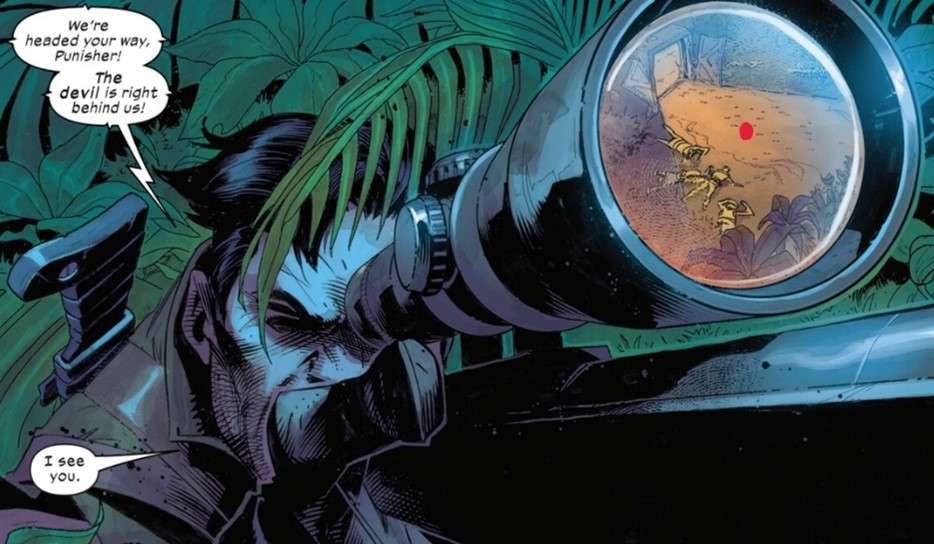
The issue begins with a very familiar face sitting inside a confessional somewhere outside the United States. The priest asks whether that person is a moral man who ignores his conscience or simply a monster without one.
His answer is that he is neither.
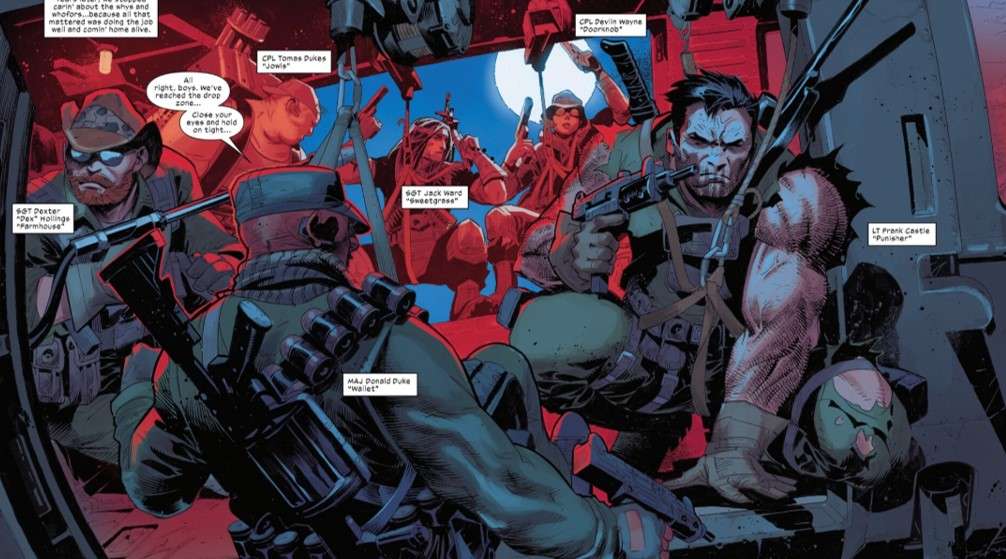
It is an appropriate introduction to a story built around moral uncertainty. Frank Castle is working alongside a small team of hardened operatives who have spent years carrying out covert missions. They were once convinced they were serving their country, but eventually recognized how often patriotism was used to justify political interests, agency budgets, and endless violence.
Their latest mission appears straightforward: infiltrate an A.I.M. facility, neutralize any resistance, and recover an unknown device.
Naturally, nothing remains straightforward for long.
The base is already under attack by Hydra, turning the operation into a chaotic three-way battle. Inside, the team discovers that the mysterious target is a Cosmic Cube—an object capable of reshaping reality according to the will of whoever controls it.
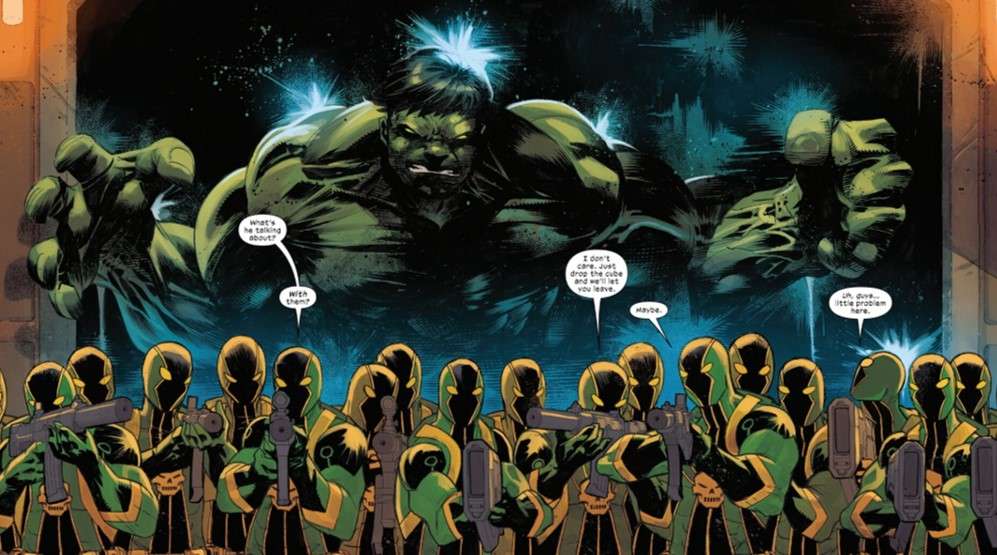
Before anyone can properly process that revelation, the Hulk arrives.
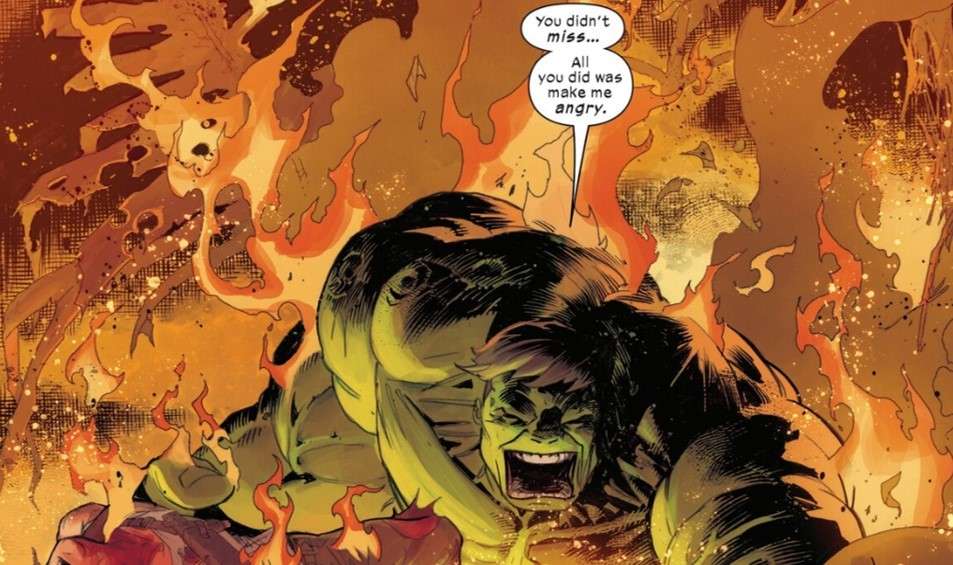
What follows is a violent, beautifully chaotic sequence in which Hulk tears through Hydra soldiers, survives sustained gunfire, destroys the surrounding area, and demands that Frank surrender the Cube.
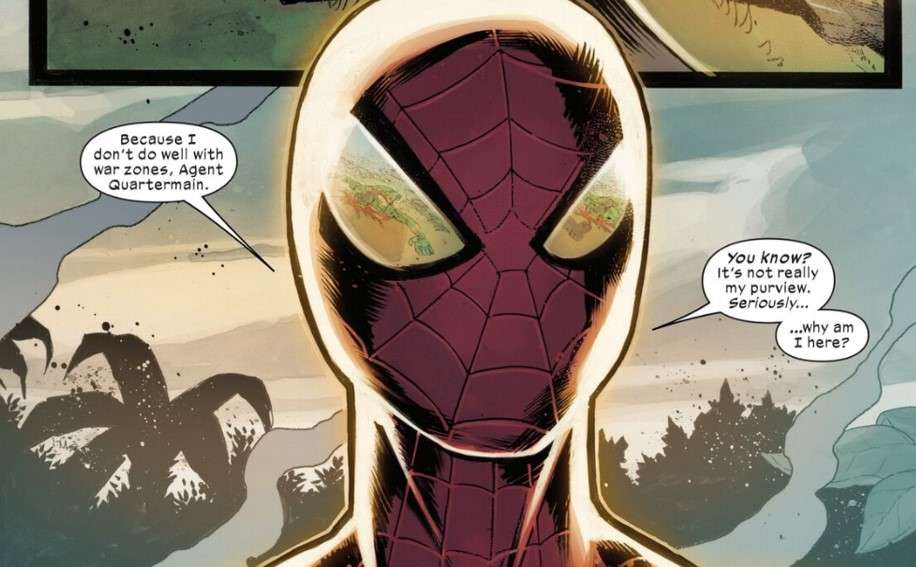
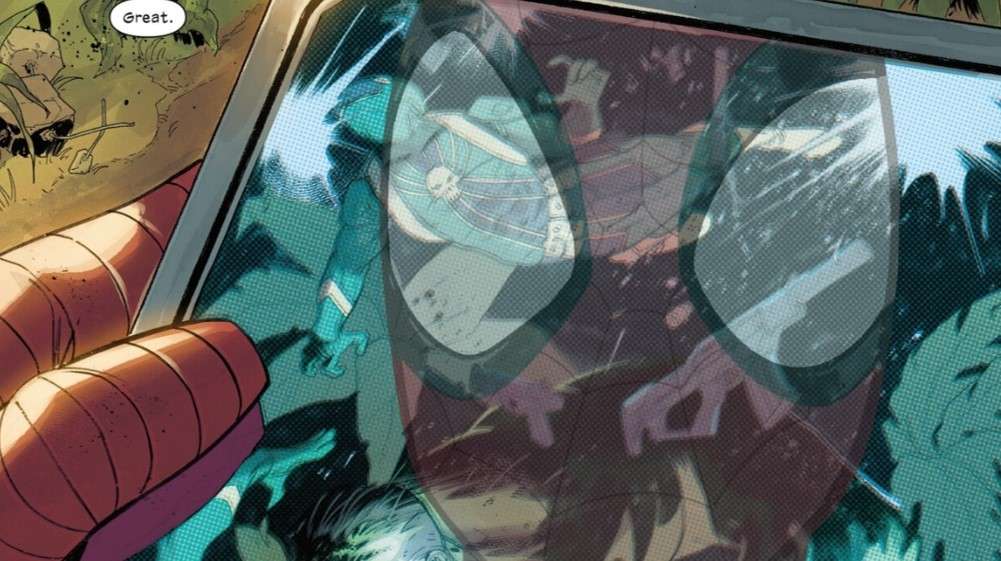
Back in New York, Peter Parker receives a late-night call directing him to a S.H.I.E.L.D. substation. There, he is shown disturbing footage of Hulk attacking Frank and the other operatives.
Spider-Man’s reaction says everything:
“Great.”
THE GOOD
A PUNISHER STORY HIDING INSIDE A SPIDER-MAN COMIC
The boldest choice here is also the issue’s greatest strength: Spider-Man barely appears.
That could easily frustrate readers buying the first chapter of a Peter Parker series, but the issue makes Frank Castle’s storyline compelling enough to justify the detour. This is not simply an extended guest appearance or an unrelated prologue. Frank’s mission clearly establishes the central mystery that will eventually pull Spider-Man away from home.
The book also understands why Punisher works best when he is more than a walking arsenal. Frank is cold, efficient, and brutally practical, but his narration reveals a man who has spent years questioning the systems that once gave his violence legitimacy.
His team believes it has finally stopped blindly following orders. Yet their current mission once again places them inside a conflict they do not fully understand. That tension gives the opening more thematic weight than a simple covert assault.
Frank may think he has learned not to trust institutions, but someone has still managed to point him toward an A.I.M. facility containing a Cosmic Cube.
That should worry him—and us.
THE HULK ATTACK FEELS GENUINELY TERRIFYING
The Hulk’s arrival is staged like a horror reveal.
He does not enter with a heroic splash page or a clever line. He emerges from the inferno after the operatives have exhausted their ammunition, battered but seemingly unstoppable. The image of Hulk surrounded by fire, carrying an injured man and calmly telling Frank that all the shooting has only made him angry, is easily one of the issue’s strongest moments.
The sequence emphasizes how terrifying Hulk would appear to ordinary soldiers. These are experienced professionals carrying enough firepower to level a facility, yet none of it matters. Against Hulk, their military training and tactical coordination become almost meaningless.
There is also an immediate mystery surrounding his behaviour. Hulk appears focused, intelligent, and specifically interested in the Cube. He is not mindlessly smashing the nearest object. He knows what he wants, and his final demand suggests that something much larger is happening behind the scenes.
THE COSMIC CUBE RAISES THE STAKES IMMEDIATELY
A Cosmic Cube is not a minor MacGuffin.
Its presence tells us that this story is not merely about Spider-Man helping S.H.I.E.L.D. investigate a rogue Hulk. Reality itself may already have been altered, which means the reader cannot completely trust what has happened.
Was this truly Hulk?
Was the Cube actually the mission objective, or was Frank’s team deliberately sent there to trigger a confrontation?
The story does not answer any of these questions yet, but it introduces them naturally. The Cube does not feel like a random escalation because the issue spends enough time establishing A.I.M., Hydra, and the covert operation before revealing it.
THE ART GIVES THE BOOK ITS OWN IDENTITY
The visuals have a rough, textured quality that perfectly matches the espionage-heavy opening. Heavy shadows dominate the jungle sequences, while deep blues, greens, and bursts of violent orange give the action an almost dreamlike atmosphere.
The page layouts are particularly effective during the assault. Panels overlap, narrow into vertical strips, and expand during moments of impact. The action feels disorienting without becoming impossible to follow, reflecting the confusion of soldiers trapped between Hydra, Hulk, and whatever larger plan is unfolding.
The contrast between the jungle and New York also works beautifully. Peter’s bedroom scene is quiet and cool, offering a momentary pause after the destruction. Yet the calm never feels reassuring. By the time Spider-Man answers the phone, the reader already knows that the violence overseas is coming home with him.
THE BAD
SPIDER-MAN FANS MAY FEEL LIKE THEY BOUGHT THE WRONG COMIC
Even though the Punisher material is strong, Peter appears only near the end.
For a first issue bearing Spider-Man’s name, that is a risky decision. Readers expecting the story’s emotional foundation, supporting cast, or explanation of the “Long Way Home” title will not find much of that here.
The final reveal successfully hooks Peter into the mystery, but it does not yet tell us why he is essential. S.H.I.E.L.D. could presumably call dozens of heroes to investigate a Hulk incident involving a Cosmic Cube. The next issue will need to establish why Spider-Man is uniquely connected to what happened.
THE OPERATIVES ARE INTRODUCED TOO QUICKLY
Frank’s team receives names and nicknames, but most of them remain difficult to distinguish before the shooting begins.
That may be intentional—Frank himself treats them primarily as soldiers rather than fully developed individuals—but it limits the emotional impact when members of the group are injured or killed. The story tells us they have history together, yet we experience very little of that history beyond brief banter.
A few additional character moments could have made their fate feel more personal.
THE MYSTERY CURRENTLY DOES MOST OF THE HEAVY LIFTING
This issue is an effective setup, but it is still largely setup.
The A.I.M. facility, Cosmic Cube, Hulk’s arrival, Frank’s disappearance, and Spider-Man’s recruitment are all intriguing pieces. However, the chapter ends before those pieces form a recognizable picture.
That is not necessarily a flaw in an opening issue, but the eventual payoff will determine how satisfying this chapter feels in retrospect. There are enough mysteries here to create excitement, though also enough that later chapters will need to avoid piling on new questions without resolving the existing ones.
FINAL VERDICT
Spider-Man: Long Way Home #1 takes an unusual route into its story, placing Frank Castle at the centre while Peter Parker waits almost entirely offstage.
It works because the Punisher material is atmospheric, tense, and packed with questions worth following. The secret mission, Cosmic Cube, Hydra assault, and terrifying Hulk appearance create a strong conspiracy-thriller foundation. By the time Spider-Man finally enters the narrative, the reader understands that he is stepping into something much larger—and probably far stranger—than a simple search-and-rescue operation.
The lack of Peter may disappoint anyone hoping for a conventional Spider-Man premiere, but this issue clearly is not interested in convention. It begins far from New York, with characters Peter has not yet met and a conflict he does not understand.
In other words, Spider-Man has a very long way to go.

PROS
- A gripping, atmospheric Punisher-led opening
- Hulk’s arrival feels genuinely dangerous
- The Cosmic Cube creates immediate mystery and enormous stakes
- Strong, textured artwork and inventive layouts
- A final hook that effectively brings Spider-Man into the investigation
CONS
- Peter Parker has very little presence in his own comic
- Frank’s supporting team is not developed enough
- The issue raises far more questions than it answers
SCORE: 8/10
A dark, violent, and deliberately unconventional beginning that sends Spider-Man toward a mystery stretching far beyond his usual neighbourhood.



Recent Comments